Showing posts with label Luis Guzman. Show all posts

Sunday, January 29, 2012

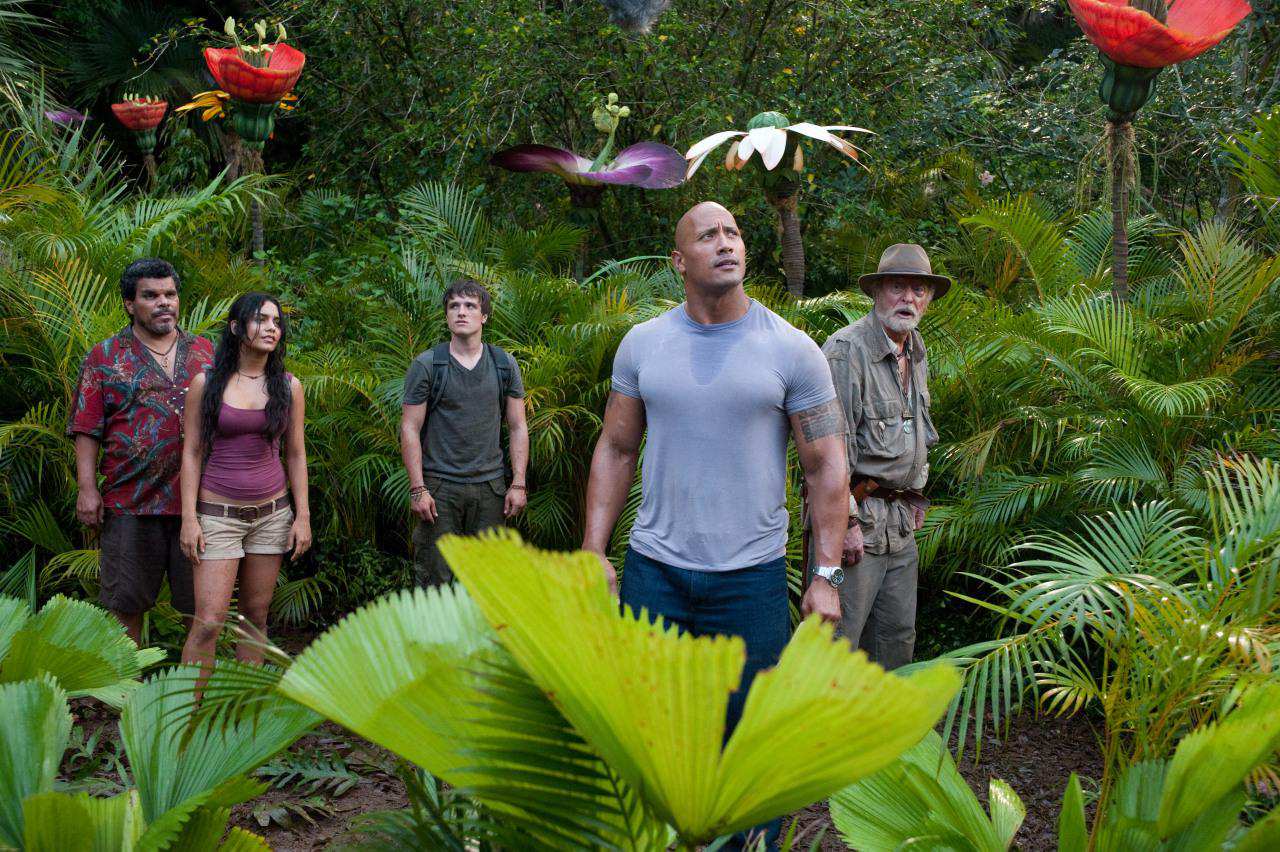
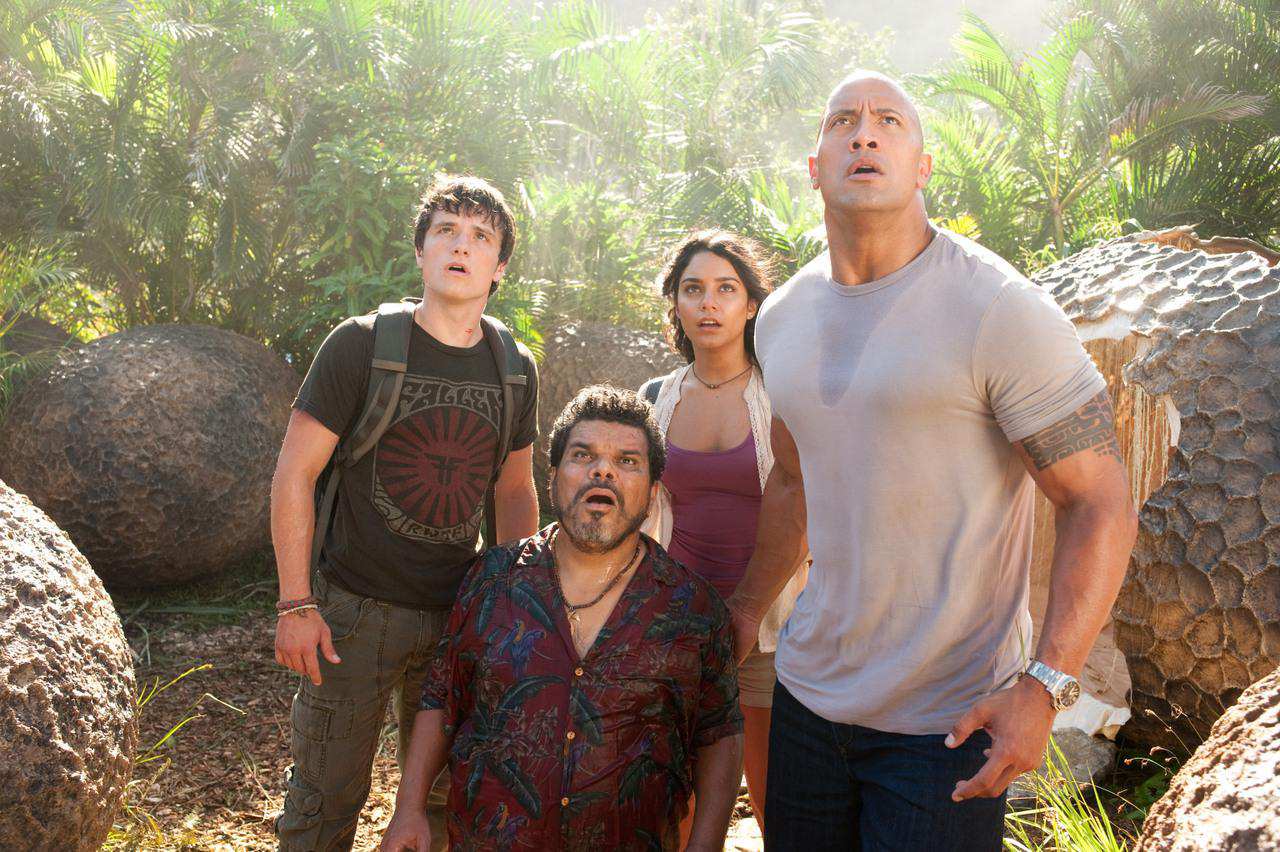
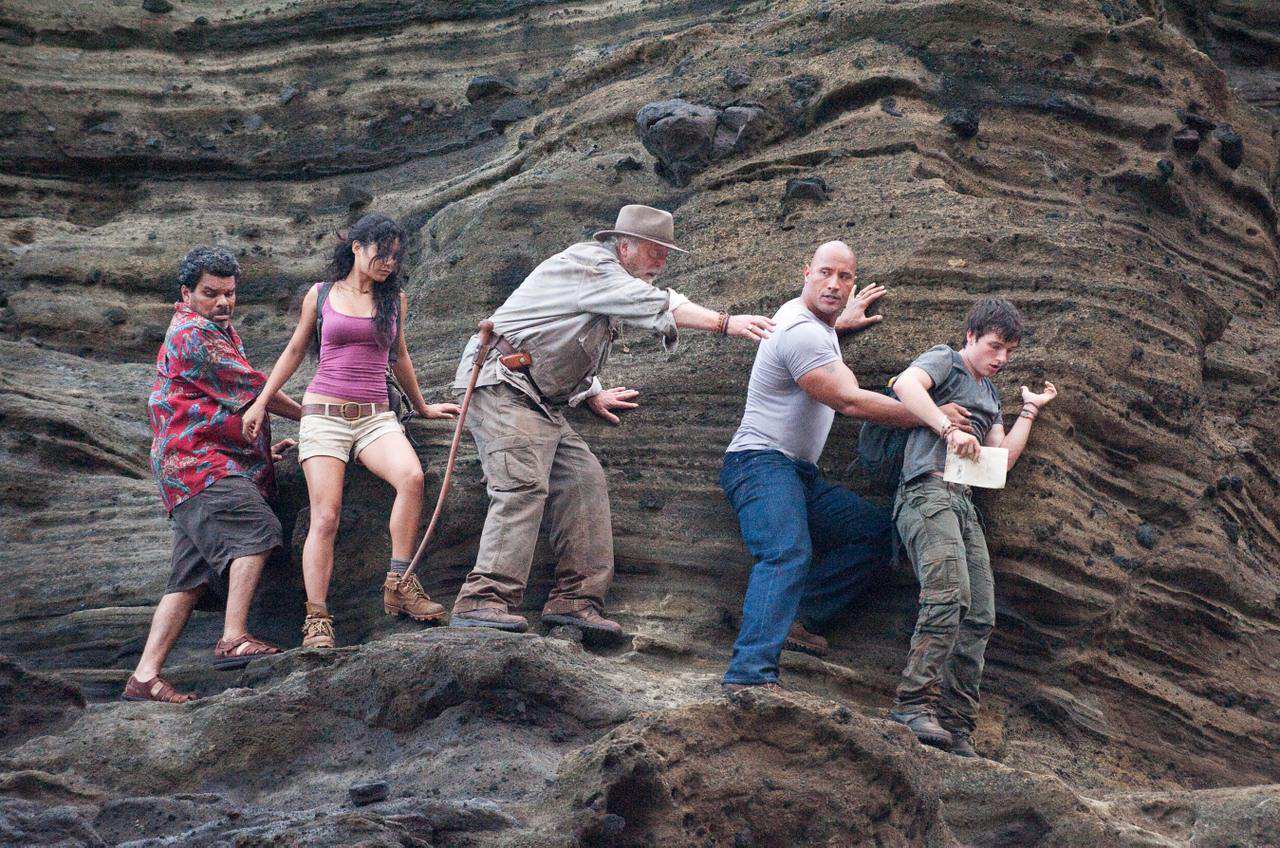
“JOURNEY 2: THE MYSTERIOUS ISLAND” takes on IMAX 3D cinemas on Feb. 2!!!

Believe the impossible, discover the incredible as New Line Cinema's “Journey 2: The Mysterious Island” embarks on an adventure of a lifetime in IMAX 3D! The film will be shown in local IMAX 3D cinemas, as well as digital 3D and regular theatres starting Thursday, Feb. 2.

Starring Dwayne Johnson, Vanessa Hudgens, Josh Hutcherson and Michael Caine, “Journey 2” takes moviegoers on a fun and fantastic new adventure to parts unknown, a place so remote it has lain hidden for centuries … and, when found, is almost impossible to escape.

Upon seeing the script for “Journey 2,” director Brad Peyton says, “I never imagined doing it small. Right away, I knew it had to involve land, sea and air, with creatures, caves, storms, underwater battles and aerial chases, and all of it set against the most incredible, breathtaking terrain. That meant utilizing the latest and best technology, to deliver something special in the 3D realm that the prequel ‘Journey to the Center of the Earth’ helped to establish.”

In 2008 that film broke ground as the first narrative feature to employ the Fusion System, a sophisticated digital 3D camera rig developed by James Cameron and cinematographer Vince Pace, and subsequently used on “Avatar.” Not surprisingly, the “Journey 2” filmmakers returned to the Cameron Pace Group for state-of-the-art strategies and equipment to capture the depth and scope Peyton wanted to achieve in a range of real-world environments. 

“Journey 2: The Mysterious Island” is a New Line Cinema presentation, will be distributed by Warner Bros. Pictures, a Warner Bros. Entertainment Company.

Wednesday, January 25, 2012

“JOURNEY 2: THE MYSTERIOUS ISLAND” siezes overseas gold

Burbank, CA January 23, 2012 – New Line Cinema’s 3D family adventure, “Journey 2: The Mysterious Island,” is off to a strong start at the global box office. Launching ahead of the US in seven territories— Australia , Korea , Hong Kong , Taiwan , Singapore , Malaysia and New Zealand —the film grossed an excellent $7.9 million, which is 44% ahead of its predecessor in the same countries. The announcement was made today by Veronika Kwan-Rubinek, President of International Distribution, Warner Bros. Pictures. 

“Journey 2: The Mysterious Island” is the sequel to the 2008 global box office hit “Journey to the Center of the Earth,” both inspired by the novels of legendary fantasist Jules Verne. “Journey 2: The Mysterious Island,” directed by Brad Peyton, stars Dwayne Johnson, Michael Caine, Josh Hutcherson, Luis Guzmán, Vanessa Hudgens and Kristin Davis.

“The first ‘Journey’ went on to gross $141 million internationally, and to exceed it by such a great margin in these early markets is truly gratifying,” Kwan-Rubinek said. “This success is a testament to the vision of the filmmakers and the dedication of the cast, led by Dwayne Johnson, for delivering the perfect film for this corridor—an action-packed and fun-filled 3D adventure for families and audiences of all ages.”

The release was targeted to coincide with the Chinese New Year holiday in Asia and summer school holidays in Australia and New Zealand , predating the US release, which required a different marketing approach. “We’ve embarked on a multi-tiered marketing program to support our early release dates, encompassing talent tours across Taiwan , Australia and Mexico , with further tour stops forthcoming,” commented Sue Kroll, the Studio’s President, Worldwide Marketing. “A strong media presence, combined with our broad advertising and event outdoor campaign, set the stage for these early launches around the world. The tremendous success overseas also helps to build momentum leading up to our U.S. and broader international launches in the weeks to come.”

Shot in 3D, the new family adventure “Journey 2: The Mysterious Island” is directed by Brad Peyton from a screenplay by Brian Gunn & Mark Gunn, story by Richard Outten and Brian Gunn & Mark Gunn

“Journey 2: The Mysterious Island” is a New Line Cinema presentation and will be distributed by Warner Bros. Pictures, a Warner Bros. Entertainment Company. The film will open across the Philippines on Thursday, Feb. 2.

Tuesday, January 24, 2012

VANESSA HUDGENS tempts fate in “JOURNEY 2: THE MYSTERIOUS ISLAND”

The young star of the “High School Musical” films, Vanessa Hudgens doesn’t sing while on camera in New Line Cinema's action-adventure “Journey 2: The Mysterious Island,” but makes up for it behind the scenes. “She’s always dancing,” co-star Josh Hutcherson points out.

“And singing,” Hudgens pipes in. The young actress describes her character, Kailani, as “very fun. She’s an island girl. She kind of gets sucked into this adventure against her will, but through Sean (Hutcherson) she opens up her heart because she’s really ruled by her head.”

The follow-up to the 2008 worldwide hit “Journey to the Center of the Earth,” “Journey 2: The Mysterious Island” takes moviegoers on a fun and fantastic new adventure to parts unknown, a place so remote it has lain hidden for centuries … and, when found, is almost impossible to escape. The film also stars Dwayne Johnson and Michael Caine.
Kailani is also the only young woman on the adventure, “So, it’s my job to look out for the boys. It’s awesome. I mean everybody’s so amazing. I really get along with the guys.”

Kailani is part of the father/daughter helicopter team who flew Sean and Hank (Johnson) to the island from nearby Palau, New Guinea, in a blinding hurricane that has destroyed the copter and left them all stranded together.

But Kailani's father, Gabato (Luis Guzman) is really just a doting father, striving to give her what she wants most: the means to go to college. Kailani, in turn, loves him dearly and appreciates his efforts but doesn’t actually expect their marginal enterprise to bring in the funds to finance that dream. Truth is, Dad isn’t much of a businessman, and Gabato’s Luxury Tours would likely not survive without her help.

Watching them interact is both touching and funny. “Vanessa flawlessly plays straight man to his craziness,” says producer Charlotte Huggins. “She never reacts to him, which is exactly what you would expect from someone who has lived her whole life with a man like this. She’s beyond reacting. He says something outrageous and then moves on to the next thought, and so does she. They were perfectly in tune.”

“Kailani is tough because she has to be,” says Hudgens. “She looks after her father. She’s also very outspoken, and, from the start, the one thing she’s been most outspoken about is how this job was a bad idea.”

And, mere minutes into their charter flight, it appears that she was right.

Not only did the helicopter accident destroy the group’s only means of transportation, it also seems to have destroyed any chance the instantly-smitten Sean hoped he had to catch Kailani’s eye. Instead, he catches only the Polynesian beauty’s ire as she vows to hold him personally responsible for this and all other calamities that lay ahead.

“Sean is a dreamer and Kailani is far more practical. He wants her to get into the spirit of this great quest but she’s just focused on the risks,” Hutcherson explains.

Having sized up the American teen before he stepped foot in the copter, Kailani is convinced he as wouldn’t have the slightest idea what her life is like and what her problems are. But as events unfold, she begins to wonder if she might have been mistaken, especially as they quite literally can’t avoid falling into each other’s arms with each surprise the island tosses up. “Embracing this experience and everything it offers means she’ll have to open her heart and Kailani has always been ruled by her head,” says Hudgens. “But she gets pulled into this incredible world and ends up finding more than she expected.”

Opening across the Philippines on Thursday, Feb. 2 in IMAX 3D, Digital 3D and regular theatres, “Journey 2: The Mysterious Island” is distributed by Warner Bros. Pictures, a Warner Bros. Entertainment Company.

JOSH HUTCHERSON explores “THE MYSTERIOUS ISLAND” in “JOURNEY” sequel

Actor-on-the-rise Josh Hutcherson (upcoming “The Hunger Games”) returns as young explorer Sean in New Line Cinema's “Journey 2: The Mysterious Island,” the follow-up to the 2008 worldwide hit “Journey to the Center of the Earth.”

When the story opens, young Sean is definitely not where he wants to be. It’s been years since his father’s death, and his mother, Liz (Kristin Davis), has recently married Hank (Dwayne Johnson) and relocated the family to suburban Ohio. With no friends around, and a stepfather with whom he’s convinced he has nothing in common, Sean spends many solitary hours poring over his maps and Jules Verne novels and dreaming about undiscovered corners of the world that await him. 

“He feels trapped,” says Hutcherson, who reprises a role that has matured in sync with his own life in the four years since “Journey to the Center of the Earth” first screened. “He’s ready to move on to bigger things, and he’s filled with curiosity about the world, which I completely understand. I think a lot of people do, even if they’re not necessarily interested in discovering lost islands. There’s just a driving need to be out there on your own, figuring things out and finding your own way.”
More specifically, Hutcherson emphasizes, “Sean doesn’t want any part of his step-dad. He thinks the guy has nothing to offer; he’s unhip, uncool and has no imagination.”

“Hank and Sean are at odds from the beginning, as one wants to connect and the other wants to distance himself,” explains Johnson. “Family is one of the most important thing to Hank, and his intention throughout the story is to make his family whole again.”

But as noble as Hank’s intentions are, Sean feels he’s to blame for everything wrong with his life right now. More importantly, he’s sure to be the immovable object standing between Sean and the exploration the young man considers his birthright. 

That assumption will be tested sooner than Sean thinks when he receives a strange radio call one night. It’s an encrypted S.O.S. that he suspects may be from his grandfather, Alexander, who hasn’t been heard from since he set out to prove that the Mysterious Island in Jules Verne’s novel was fact and not fiction. 

“Alexander is Sean’s idol. He’s pretty much always done whatever he wanted, and he’s always off on some crazy expedition,” says Hutcherson. “If Alexander is in trouble, Sean will do anything to reach him.”

Sean couldn’t be more thrilled and vindicated. But his euphoria at finding his grandfather is short-lived when he learns that getting off the island will be much harder than falling onto it, and that they have very little time in which to accomplish it. The ground beneath them is sinking. Fast. The entire land mass will be underwater in days, if not hours, and their slim chance of survival is entirely in their own hands.

Hutcherson was most recently seen in Lisa Cholodenko’s Academy Award®-nominated feature, “The Kids are All Right.” His additional film credits include “The Vampire’s Assistant,” opposite John C. Reilly and Salma Hayek; “Journey to the Center of the Earth 3D,” “Bridge To Terabithia”; “Firehouse Dog”; “RV”; “Little Manhattan”; “Zathura” and “The Polar Express.” Hutcherson won Young Artist Awards for Leading Young Actor for his roles in “Zathura” and “Bridge to Terabithia.”

Opening across the Philippines on Feb. 02 in IMAX 3D, Digital 3D and regular theatres, “Journey 2: The Mysterious Island” is a New Line Cinema presentation, will be distributed by Warner Bros. Pictures, a Warner Bros. Entertainment Company.

DWAYNE "The Rock" JOHNSON journeys to “THE MYSTERIOUS ISLAND”

He has solidified himself as a global box office success with gross film revenues in excess of 2.1 billion dollars worldwide with such blockbusters as “Fast Five,” “The Rundown,” “The Scorpion King” and “The Mummy Returns.” Now, Dwayne Johnson stars in another potential megahit, New Line Cinema's 3D family adventure “Journey 2: The Mysterious Island.”

The film begins when seventeen-year-old Sean Anderson (Josh Hutcherson) receives a coded distress signal from a mysterious island where no island should exist. Unable to stop him from tracking the signal to its source, Sean’s new stepfather, Hank (Johnson), joins the quest that will take them first to the South Pacific, and then to a place few people have ever seen. Or lived to tell about. It’s a place of stunning beauty, strange and threatening life forms, volcanoes, mountains of gold and more than one astonishing secret, in this follow-up to the 2008 worldwide hit “Journey to the Center of the Earth.”
Johnson plays Hank, a Navy vet who runs his own construction company and is accustomed to tackling things head-on and fixing problems. But can’t quite figure out a way to fix the situation with his stepson, Sean. “Like a lot of teenagers—and I was no exception—Sean thinks he has all the answers,” Johnson says. “He’s experienced a lot of abandonment between the loss of his father and his grandfather’s travels, so he is naturally wary when this new father figure comes into his life. Hank and Sean are at odds from the beginning, as one wants to connect and the other wants to distance himself.”

Johnson continues, “Family is one of the most important thing to Hank, and his intention throughout the story is to make his family whole again.”

“Dwayne brings so much to every role,” notes director Brad Peyton. “With his million dollar fists and billion dollar smile, he could carry a movie just on his action chops alone but he also has impeccable comic timing and he’s endlessly charismatic. I wanted everything—the whole Dwayne Johnson experience—for this movie, and he brought it all. He even sings…who knew? And plays the ukulele.”

But as noble as Hank’s intentions are, Sean feels he’s to blame for everything wrong with his life right now. More importantly, he’s sure to be the immovable object standing between Sean and the exploration the young man considers his birthright.

That assumption will be tested sooner than Sean thinks when he receives a strange radio call one night. It’s an encrypted S.O.S. that he suspects may be from his grandfather, Alexander, who hasn’t been heard from since he set out to prove that the Mysterious Island in Verne’s novel was fact and not fiction.

Its first four words are electrifying. THE ISLAND IS REAL.

“Alexander is Sean’s idol. He’s pretty much always done whatever he wanted, and he’s always off on some crazy expedition,” says Hutcherson. “If Alexander is in trouble, Sean will do anything to reach him.”

Likewise, Hank will do anything to reach Sean, even if it means accompanying him to the South Sea on what he believes can only be a wild goose chase, feigning interest in the unlikely yarn about an island that history forgot, just to keep an eye on him. But days later, after a harrowing crash-landing in the most unbelievable place he’s ever seen, no one is more surprised than Hank.

While the island unites them in a single goal, it underscores the fact that their individual reasons for being there are widely different. “But it’s the developing relationship between Sean and Hank that anchors everything else and serves as our way into the story,” cites Peyton, who opted for a light touch in showing how these two ultimately find their way toward an understanding.

“Sometimes in the development of a script there’s the temptation to oversell the character beats and arcs,” producer Tripp Vinson offers. “But in the hands of talented actors like Dwayne and Josh you can allow those revelations to emerge through their performances.”

Opening in theatres beginning February 2012, “Journey 2: The Mysterious Island” is a New Line Cinema presentation, will be distributed by Warner Bros. Pictures, a Warner Bros. Entertainment Company.

Thursday, January 5, 2012

JOURNEY 2: THE MYSTERIOUS ISLAND this 2012!

The follow-up to the 2008 worldwide hit “Journey to the Center of the Earth,” New Line Cinema's “Journey 2: The Mysterious Island” takes moviegoers on a fun and fantastic new adventure to parts unknown, a place so remote it has lain hidden for centuries … and, when found, is almost impossible to escape. The film stars Dwayne Johnson, Vanessa Hudgens, Josh Hutcherson and Michael Caine.

A fan of the first film which introduced intrepid young explorer Sean Anderson (Hutcherson) to audiences worldwide, director Brad Peyton says, “I wanted to embrace Sean’s story and advance it, with amazing new landscapes and a fresh set of challenges that will take him further than he’s ever been because he’s not a kid anymore. He’s seventeen now and ready to blaze his own trail in the world. This is his chance to prove he’s not just along for the ride; he’s an explorer in his own right.”

Peyton is no stranger to combining action and comedy with a sweep of scale and a dash of the unexpected. Upon seeing the script for “Journey 2,” he says, “I never imagined doing it small. Right away, I knew it had to involve land, sea and air, with creatures, caves, storms, underwater battles and aerial chases, and all of it set against the most incredible, breathtaking terrain. That meant utilizing the latest and best technology, to deliver something special in the 3D realm that ‘Journey to the Center of the Earth’ helped to establish.”

In 2008 that film broke ground as the first narrative feature to employ the Fusion System, a sophisticated digital 3D camera rig developed by James Cameron and cinematographer Vince Pace, and subsequently used on “Avatar.” Not surprisingly, the “Journey 2” filmmakers returned to the Cameron Pace Group for state-of-the-art strategies and equipment to capture the depth and scope Peyton wanted to achieve in a range of real-world environments.

Dedicated to a full location shoot from the start, the director states, “I felt the actors should have dirt under their feet. I wanted a real jungle, not a green-screen jungle. As the setting for so many spectacular images, it needed that literal grounding.”

The filmmakers also liked the fact that the characters thrown into this tropical paradise-turned-deathtrap must use their wits as well as their reflexes to survive, especially when they discover that plant and animal life there grows by its own rules.

It’s the Island Rule, in fact, also known as Foster’s Rule. Producer Charlotte Huggins explains, “It’s a genuine biogeographic theory, that, over the course of evolution in an isolated environment, large things can become small and small things become large. So a herd of elephants there might look and act exactly like elephants except that they’re miniatures, while butterflies could look and act exactly as butterflies would, except that they’re enormous.”

The downside of such visual wonders would be great carnivorous birds and lizards, some the length of a football field, who see the explorers as their next meal.

Michael Caine, starring as Anderson patriarch Alexander, who made wanderlust the family business and is the catalyst for this latest excursion, acknowledges, “This is no children’s fairy tale. It’s very fast, and the kids are going to have to be smart to keep up.”

Opening in theatres beginning February 2012, “Journey 2: The Mysterious Island” is a New Line Cinema presentation, will be distributed by Warner Bros. Pictures, a Warner Bros. Entertainment Company.

Tuesday, December 13, 2011

“JOURNEY 2: THE MYSTERIOUS ISLAND” character banners revealed!!

Warner Bros. has just released the character banners for its upcoming action-adventure “Journey 2: The Mysterious Island.” The banners individually feature the characters played by Dwayne Johnson, Vanessa Hudgens, Josh Hutcherson and Michael Caine.

In this follow-up to the 2008 worldwide hit “Journey to the Center of the Earth,” the new 3D family adventure “Journey 2: The Mysterious Island” begins when young Sean Anderson (Josh Hutcherson, reprising his role from the first film) receives a coded distress signal from a mysterious island where no island should exist. It’s a place of strange life forms, mountains of gold, deadly volcanoes, and more than one astonishing secret.

Unable to stop him from going, Sean’s new stepfather, Hank (Dwayne Johnson), joins the quest. Together with a helicopter pilot (Luis Guzman) and his beautiful, strong-willed daughter (Vanessa Hudgens), they set out to find the island, rescue its lone inhabitant and escape before seismic shockwaves force the island under the sea and bury its treasures forever.


“Journey 2: The Mysterious Island” also stars Michael Caine as Sean’s grandfather, Alexander Anderson, and Kristin Davis as Sean’s mom, Liz Anderson.

Opening in theatres beginning February 2012, “Journey 2: The Mysterious Island” is a New Line Cinema presentation, will be distributed by Warner Bros. Pictures, a Warner Bros. Entertainment Company.


Saturday, November 12, 2011

First-look: Poster and trailer of Dwayne Johnson's “JOURNEY 2: THE MYSTERIOUS ISLAND”

Warner Bros. jumpstarts the buzz for “Journey 2: The Mysterious Island” as it launches the film’s poster and trailer online.

In this follow-up to the 2008 worldwide hit “Journey to the Center of the Earth,” the new 3D family adventure “Journey 2: The Mysterious Island” begins when young Sean Anderson (Josh Hutcherson, reprising his role from the first film) receives a coded distress signal from a mysterious island where no island should exist. It’s a place of strange life forms, mountains of gold, deadly volcanoes, and more than one astonishing secret. 

Unable to stop him from going, Sean’s new stepfather, Hank (Dwayne Johnson), joins the quest. Together with a helicopter pilot (Luis Guzman) and his beautiful, strong-willed daughter (Vanessa Hudgens), they set out to find the island, rescue its lone inhabitant and escape before seismic shockwaves force the island under the sea and bury its treasures forever.


“Journey 2: The Mysterious Island” also stars Michael Caine as Sean’s grandfather, Alexander Anderson, and Kristin Davis as Sean’s mom, Liz Anderson.

Opening in theatres beginning January 2012, “Journey 2: The Mysterious Island” is a New Line Cinema presentation, will be distributed by Warner Bros. Pictures, a Warner Bros. Entertainment Company.

Tuesday, September 27, 2011

Brian De Palma: Snake Eyes

Snake Eyes is, in a bizarre way, the logical continuation of Brian De Palma's previous film, Mission Impossible. Mixing political thriller with questionable plays for De Palma's capacity to capture Romantic grief, Snake Eyes likewise feels like a safe bet for the director, but one he that allows him to push his luck. If it's one of the emptiest films of De Palma's corpus—a collection of work that houses more than a few technical exercises—at least the director gives us a story so ridiculous you almost don't mind when it collapses in the third act.

In a long career of intricate, arresting openings, the start of De Palma's Snake Eyes may be his finest. A 13-minute tracking shot that moves through the grimy politics behind a heavyweight championship fight, the opening moves from camera monitors through police corruption and finally ends with an assassination. I would couch that in a spoiler warning, but I want to avoid repetition and thus see no need to mention that this is a Brian De Palma movie a second time. It's the start of a shallow but merry and hysterically over-intricate journey into late-Clinton America, a time of economic success and almost-grating peace, of a country so well off it's now darkly quaint to think how badly everyone wanted something interesting to happen.

That opening shot serves not only to introduce principal players—chiefly crooked cop Rick Santoro (Nicolas Cage) and his best friend, Commander Kevin Dunne (Gary Sinise)—but to serve as a smorgasbord of De Palma's pet themes and tricks. The initial focus on pre-newscast prep and pullback to a row of monitors starts the film with surveillance, while Rick's tour through the arena's underbelly, placing bets for the fight and chasing down hoods (Luis Guzman) who hang out with the defending champ, shows off corruption and the way some cops fit into the criminal underworld a little too well. De Palma's Steadicam careens around corners, tilts with anticipation, and when the action moves to the floor of the arena for the big match, De Palma uses the frenzy of the crowd (and a ludicrously oversized and ironic American flag) to instantly plunge into sensory overload. You're left waiting for something terrible to happen, a feeling made worse by De Palma strictly tethering the movement to Rick, always pivoting to look at suspicious people around him and Kevin sitting by the visiting Defense Secretary before returning to an oblivious and ostentatious Rick. At the height of the match, shots ring out, and Rick turns to see the Defense Secretary dying, the only clues amidst the pandemonium the previously established glimpses at surrounding characters. As is so often the case with De Palma, the style slowly reveals the substance.

It's a shame the rest of the film doesn't live up to this bravura opening, a perfectly timed escalation of comic overacting, art-for-art's-sake stylistic flourishes and gripping tension that introduces multiple stories and red herrings from the start. Once Rick, with his gaudy leather-brown jacket and leopard-color Hawaiian shirt, starts digging into a case that runs far deeper than he could ever comprehend, it soon becomes evident that he's too indifferent to justice and too invested in some of the suspects to pursue the truth with the conviction he displays.

Not that it isn't fun to watch Cage strut around yelling his head off at all those who cross him. In many ways, he's the ideal Hollywood star for a De Palma film, capable of powerhouse performances when matched with the right material but incapable of subtlety at all times. Cage is a bundle of wild eyes, a manic grin, and a base volume so high one would be forgiven for assuming Cage imagined himself in some strange variant of Speed where he couldn't drop beneath 55 decibels. The only time he looks in his element is when stands up in his front-row seat and declares himself king as the crowd roars. That is the single moment of the film Cage is sufficiently in his element; the rest of the time, the action takes place on Earth, a place Cage infrequently dwells.

Made to chase down various leads, Rick slowly uncovers a vast conspiracy that does not border on comical so much as merrily squeak a clown nose as it rides over the line on a unicycle. De Palma announces the twist early on, even framing it in blatant visual terms: red light bathes the double-crosser as the camera goes Dutch, and ominous music sets in because you can never have too many clues in a De Palma film. Taking a page from their work on Mission: Impossible, De Palma and writer David Koepp set their sights on a wounded military-industrial complex reacting to the end of the Cold War gravy train with pent-up masculine capitalist aggression. This curious, amusing mash-up of jingoistic greed and psychosexual feelings of impotence in the military machine when it cannot flex its muscles to impress people is grounds for merciless De Palma satire, but the director never truly explored the idea in either of these films.

But if Snake Eyes sacrifices potential depth of comedy (to say nothing of humanity), it at least proves a fun diversion that lets De Palma dance around coquettishly. He and Cage understand each other to the point that the two nearly ring tragedy out of the absurdity of the double-cross and Rick's steadfast refusal to accept it (to those always on-guard for De Palma's purported misogyny, the fact that he blames a woman to her face for the transgressions of a man edges uncomfortably into an abstract, allegorical form of slut-shaming, with money swapped out for sex). Sinise plays Dunne like Lieutenant Dan with more self-control but all of the frothing hatred roiling underneath; to hold back that tension, Sinise clenches his jaw, and it's entirely conceivable he turned in this performance after having his mouth wired shut from some kind of accident. His hissed lines make a jolly counterpoint to Cage's toothy yells. Carla Gugino steals the show as the mysterious woman whose role remains ambiguous for a chunk of the film as she alternates between the femme fatale, the brilliant professional and the damsel. Gugino handles these shifts so fluidly she emerges perhaps too talented a chameleon for the sort of person her character really is, but it's a delight watching her melt through various female types while not letting herself be defined by any of them.

But not even Gugino is as interesting as De Palma's camerawork. Though the film lacks the aesthetic or political bite to place it among the director's finer works, Snake Eyes boasts a few setpieces that display the best (and most gloriously tacky) of De Palma. Besides the stupendous short-film career-summary of the opening shot, De Palma outdoes himself with a drift over hotel rooms as evil forces close in on Cage and Gugino. With a camera pointed straight down, De Palma moves over gauche tableaux of Atlantic City oblivion, scanning over garishly colored rooms filled with reveling frat boys, lonely gamblers, gratified johns, even a businessman or two who clearly imagined themselves enjoying the kind of night we see in the other neon-smeared suites clinging to the '80s by the fake fingernails. As with the first shot, it's silly, tasteless, and oh so brilliant.

Tuesday, July 12, 2011

Brian De Palma: Carlito's Way

I used to think Carlito's Way was, to quote the popular interpretation, an "apology" for Scarface, a toned-down, mature take on that film's criminal excess that depicts a gangster trying to redeem himself rather than climb the ranks of the underworld. After revisiting that film, however, I can better see what De Palma was doing with his first, more grandiose view of the criminal underworld and, with unorthodox focus, how it affected America's rising Latino population. Nevertheless, this film, with its ever-moving but graceful camera, bold use of color and flagrant romanticism, not only proves the superior view of criminal life but also stands as perhaps De Palma's finest achievement as a filmmaker and the best balance of his confrontationally probing camera and the mainstream Hollywood elegance of which he wanted to be a part.

This mix of the daring with the quotidian might explain why so many mistook the film for a mildly original take on a tired subject. But to see how the film subverts and analyzes clichés, one need look no farther than the opening, a monochromatic framing device that spoils all pretense at suspense by showing the titular hero murdered by way of introduction. De Palma uses the sequence not only to set in motion his aesthetic approach—using his Steadicam shots as POV representations of Carlito's view, up to and including the slow pivot upside down and pull back as Carlito's soul leaves his body—but to make sure that we spend the film not wondering what happens to Carlito but why this doomed scenario occurs.

As the film moves into flashback, we see Carlito (Al Pacino), a convicted heroin dealer, getting out of prison after serving five years of a 30-year sentence. His lawyer and friend, Dave Kleinfield (Sean Penn), gets him off not for good behavior or truly appealing the case but pointing out D.A. corruption. Pacino uses the court scene to get out his hoo-hah mania he exhibited in the previous year's Scent of a Woman (a movie I maintain is Animal House with stunt casting and a sense of self-importance). He carries on about being a changed man, shouting over the judge who has to take it because he, too, was complicit in the evidence tampering that put Carlito away. "I've been cured! Born again, like the Watergaters," Carlito shouts gaily and sardonically, and it's impossible to see the sincerity underneath his spiel. But Pacino soon calms down, and his Carlito proves to genuinely wish to quit the game, to quietly exit the world where he built up a considerable reputation.

The contrast between Tony Montana and Carlito Brigante is less a means of making one a response to the other but of establishing them as polar opposites. Tony, young, brash and oblivious, climbs the ranks of Miami's criminal underworld through sheer brutality. His mantra, "The World is Yours," summarizes his approach: seize power until you sit in a king's throne, regardless of what you sacrifice to get there. Carlito, on the other hand, is older, wiser and wearier. Like Tony Dayoub says in a brilliant piece tackling the mirror effect of the two films, he is "almost but not quite the elder statesman Tony could have grown into had he outlived his impetuous youth." Tony also noted the color-coding of the two Hispanic protagonists, a key reversion of usual white-black color significance. Tony, who wears ostentatious white suits, is the villain, his clothes reflective of his drug of choice, his desire to be seen in Miami's underworld and, perhaps, his attempt to join the privileged race he thought he could by and screw his way into. Carlito, the one wants to get out of the game and go straight, wears stereotypically villainous black. But this is his futile means of trying to disappear in his surroundings, hoping to quietly move out of the underworld after becoming disillusioned with it. Carlito just needs $75,000 to retire. Tony Montana spent more on wing collars.

But, of course, one does not merely walk away from crime, and De Palma highlights the naïveté of this facile camouflage by colorizing the mise-en-scène to such an extent that the film occasionally looks like it came right out of Old Hollywood. Blue-lit nights expose him, as do the bright-red walls of smoky dives and the chrome-plated realm of the nightclub Carlito invests in to raise the money he needs to escape to the Caribbean for a new start. (Incidentally, the club, El Paraiso takes its name from the food stand Montana opened in Scarface). That club brings out the fatalistic romanticism of the movie, a weak approximation of Carlito's escapist fantasy that looks like a mock-up of a cruise liner interior and feels, for all its coke-addled disco dancers, more like a perpetual high school dance than a cesspool of drugs, sex and crime. The innocence under its veneer of tacky '70s "class" somehow makes the place more constricting and repellent, as if the building too is aware of its fate but still locked into its servicing role.


That romanticism explodes as Carlito tries to make his peace with former partners and to rekindle a relationship with Gail (Penelope Ann Miller), a dancer with whom he broke up before going to prison. He did so not to hurt her, but he broke her heart anyway, and the chemistry between Pacino and Miller subverts the usual male chauvinism of the mob world: when he first tracks her down, Carlito stands on a rooftop across from the dance studio in the pouring rain holding a trashcan lid over his head as a low-rent umbrella. In this moment, De Palma's appropriation of Hitchcock's voyeurism transmutes from obsessive quest for power into pure, innocent longing. This is not a man who feels his love "belongs" to him but someone who never stopped caring for her. After they reconcile, Carlito watches her dance with another man with a smile on his face, completely non-threatened by the harmless display, even when other men raise objections to seeing his woman dance with someone else. Carlito feels like a better man around her—note that Montana wanted to feel white around Elvira, who constantly brought up and mocked his Hispanic background, while Gail is the only person to call Carlito by the Anglicized name "Charlie"—and one almost forgets the inevitability of his attempts to escape when watching the two of them plan their retirement.


Yet Gail soon discovers how trapped Carlito is within the system, and her voiced complaints often make plain the self-evident truths Carlito cannot quite see. For all his talk of not recognizing the mid-'70s world of cocaine and disco in relation to the sociopolitical revolution he left behind, it is Carlito, not everyone else, who has changed. Bound by a code of honor not to rat on his allies and to remain loyal, Carlito never snitched on his old partner, who appreciates the gesture but feels no financial or personal debt to his old partner despite the fact that he got filthy rich while Carlito was away. For all Carlito's efforts to avoid violence and crime, such things seem to find him anyway. He gets roped into going to a drug deal with his young cousin that goes awry, and later he must deal with Benny (John Leguizamo), an upstart little shit clearly looking to make his name by tearing down Carlito. Benny is reminiscent of Tony Montana, a connection that then links back to Carlito when another gangster accurately tells Carlito "This guy is you 20 years ago."

Torn between his sense of code, his awareness of the vicious nature of the streets and his desire to go straight, Carlito can't ever seem to win: he reacts stubbornly when he shouldn't, agreeing to help an increasingly unstable Dave settle his own debts out of the loyalty he owes the lawyer for springing him. On the flip-side, he shows clemency for Benny, the man who, frankly, he should have killed, an idea that antithetical to a normal sense of morality*. But we're talking about the criminal world, where rules have been warped and ethics muddied. Bewildered by these conflicting notions of right and wrong, Carlito occasionally voices his pressure, saying, "The street is watching. She is watchin' all the time," as if the city itself is bearing down on him, waiting for his moral tug of war between desire for self-improvement and perceived obligation to others to stretch him to the breaking point before delivering the coup de grâce.

To De Palma and writer David Koepp's credit, they do not let Carlito off the hook for wanting to do the right thing. In the aforementioned drug deal with his cousin, Carlito knows instantly that something is off in the bright red pool hall where the deal occurs. De Palma's camera has rarely been better as it sets up Carlito as a knowledgeable killer. Just because Carlito wants out does not mean he was just someone who got caught up in the trade: as POV shots dart to an ajar door where a thug awaits and the camera moves around the pool table as Carlito sets up a trick shot as an excuse to keep circling and take stock of the whole room, we see how professional he is in this underworld. He's skilled enough to know what's about to happen and to position himself to kill his way out of the situation. In The Godfather Part III, Pacino's Michael growls, "Just when I thought I was, they pull me back in," but that is just Corleone's usual obliviousness to his own culpability. Carlito is not someone who just "made a few mistakes" in life, but he genuinely wants to reform where Michael wishes to have his cake and eat it too. It is Carlito, far more than Michael, who is trapped by something not of his design.


By the same token, it's almost impossible not to sympathize with him, also as a result of the most elegant camerawork of De Palma's career. He creates a tone so romantic that a conversation between Carlito and Gail through the crack of a chain-bolted door is not intimidating but teasing and charming, to the point that when he kicks the door in after a playful striptease involving a mirror, it's a comic, even loving payoff rather than a tense moment of sexual dominance. De Palma has used a circling shot more than once, but here the camera actually dips and tilts as it revolves around the kissing couple, swooning with them. The camera moves incessantly but does so with grace, a beauty that feels far more natural than the more forced and restrained formalism of, say, The Untouchables. At last, De Palma finds the perfect balance between his mainstream aspirations and his underground, morally probing aesthetics, a union bolstered by the fact that, for once, De Palma is using his camera to poke around the moral implications of his characters in a wholly un-ironic fashion. It's not the first film of his to be sincere, but it is the first to channel his penchant for deconstruction entirely into the characters and genre clichés, gently picking apart stereotypes to see the humans who inspired them.

But even with De Palma's masterful camerawork, the film wouldn't work without an understanding lead performance, and Pacino clearly demonstrates he knows exactly where De Palma is coming from for the second time. He acted like a Pre-Code madman in Scarface, but here he is so gentle that I remember the softer, vulnerable side to Pacino from the '70s. In his prime, no one had better control of what he could say solely through his eyes, and that skill returns here. His longing, anger, despair and fantasy dances across his face in beautifully understated terms, and he delivers lines with quiet force. I don't know that Pacino has ever been more heartbreaking; his whole performance is like the look of devastation on his face in Dog Day Afternoon when his lover publicly rejects him, stretched out over two and a half hours. When he first hugs Gail after reuniting, he softly smells her, triggering his memory with its most connected sense, and his ragged breath is as stoic a display of unspeakable joy as exists in the movies. When Dave drags him into a ludicrous attempt to bust an Italian mob boss out of prison, Pacino's face registers disgust more than anger at the addled lawyer's horrific change of plans and eventual betrayal, a recognition of the uselessness of the code that binds him and seems to let everyone else behave as he pleases

Reveries and dreams have always been a staple of De Palma's films, but usually in a literalized, nightmare form. Here, the dreams are less literal and more yearning, and the only nightmare comes with the impossibility of their fulfillment. A symbolic shot of Carlito trapping a cockroach under a glass and letting it go reflects the error of leaving Benny alive and outraged, but the roach might as well be Carlito, trapped at the mercy and amusement of forces so vast they feel existential. The film climaxes with a nimble cat-and-mouse chase through the subway that ends in the only dastardly cruel twist in the film, impressive considering we know the true outcome already. But as the film returns at last to its framing device as Carlito fades from this world, the last shot settling on a billboard advertising a Caribbean getaway. As Carlito dies, the subjective view of this poster alters, the woman dancer frozen in a snapshot suddenly turned into a dancing Gail, the dream fatalistically actualized in hallucination. As this shot holds over the credits, Joe Cocker's "You Are So Beautiful" begins to play, the gravel-voiced singer undercutting his ode even as the pained growls make it all the more sincere. It's the perfect swan song for the film, a plaintive yet doomed piece of (capital- and lowercase) romantic genre film, in which the last shot is both bitter and beautiful. In a sense, Carlito's Way may be the cruelest film De Palma, who delights in tricks and dramatic catastrophe, ever made, a lengthy explication of a dream that does not come true. But if it is so rending, that is only because, better than any other film in his canon, the director makes us truly care for his characters, and his cosmic sense of irony is at no one's expense, save poor Carlito's.


*Elsewhere, though, Carlito's clemency is more justifiable and even redemptive. An old associate (Viggo Mortensen), now paraplegic from being shot, wears a wire to a conversation with him as the D.A. looks for any excuse to put Brigante back in jail. By rights, Mortensen's character should be promptly shoved into the nearest river tied to a concrete wheelchair. But Carlito relents: he looks at the man who has had so much taken from him by the life Carlito has come to despise, and he pities the paraplegic wreck. Not only is it a true moment of forgiveness, it is also a practical moment of conscience compared to the fatal mistake of letting Benny go: releasing Lalin is a shrewd move that proves to cops that he really is reforming, not simply grandstanding to return to crime.

Wednesday, July 6, 2011

The Taking of Pelham 1 2 3 (Tony Scott, 2009)

Tony Scott's remake lacks any and all suspense (as do nearly all his movies despite his penchant for thrillers), but he also finds a surprising resonance in the material. Blessed with a superbly written script, Scott tones down his usual madness and lets his actors do most of the work. Oh, he still can't help himself at times, but Scott puts his talents toward a sense of visual pacing and structure that uses the battle of wits between Garber (Denzel Washington) and Ryder (John Travolta) to slyly bring out back story and sociopolitical themes.

Travolta hams it up to no end, playing ex-con stock trader Ryder like the demon of Wall Street unleashed below the city, his outrage at serving time for his white collar crimes well-timed to the outrageous entitlement displayed by the real stock brokers who took all kinds of shortcuts to make a fast buck. Garber too is guilty, but we see the disparity between them, greed motivating one and financial desperation the other. Washington and Travolta have the awkward task of playing off each other mainly through long-distance radio communication (an analog take on the potential for meaningful friendships through Internet communication?), but they make for one of the richest hero-villain pairs in years and get across some unexpectedly keen social commentary to boot, even if Travolta oversells it. Supporting players John Turturro (as an arrogant negotiator), James Gandolfini (a scandal-ridden mayor) and Luis Guzman (a former MTA employee nervously helping Ryder) also deliver solid performances.

Scott frames his film with flattened compositions, a beautiful array of neon-lit streaks of blue, red and green, and Scott's "Big Board" fetish realized by the flashing subway map back at Rail Control (a board framed, like all of Scott's giant screens, as a means of both clarifying and abstracting action). Yet despite his usual touches of altered speeds and on-screen text, Scott's aforementioned ease off the throttle shows that his love of visual style does not blind him to seeing and focusing on the great chemistry between Washington and Travolta. In fact, as a movie about a sedentary narrative spruced up by slick, action-oriented direction, I found The Taking of Pelham 1 2 3 to be not only more tasteful but more emotionally affecting than Danny Boyle's slick con job 127 Hours.


Sidenote: I don't know if Travolta decided to play Ryder as a flagrant homosexual or that's how the part was written, but if and when he ever comes out of the closet, expect this movie to be gutted for clips on late-night shows. Dressed like he just came from a gay bar, Travolta finds ways to be even more suggestive. Describing a teenage hostage to Garber, Ryder notes his outfit and tangentially throws in "he makes it work" before getting back to the threats. Talking with one of his cohorts about Garber, Ryder bypasses the fact he doesn't know what the man looks like and says, "He's got a good voice, though; he'll be my bitch in prison." Bless his heart; he seems to know he'll never be a star again and at least balances out his usual tat with unorthodox performances in this and Hairspray.