Showing posts with label Clint Eastwood. Show all posts

Monday, January 23, 2012

NAOMI WATTS & JUDI DENCH – The women of “J. EDGAR”

Oscar honorees Naomi Watts and Judi Dench play the most important and influential women in the life of towering American historical figure J. Edgar Hoover, in Warner Bros.' controversial drama, “J. Edgar.” They portray Hoover's trusted secretary, Helen Gandy; and his stern mother, Annie Hoover.

A lifelong ally whom Hoover knew would never betray him was his secretary at the Federal Bureau of Investigation (FBI), Helen Gandy. “Helen kind of ran the agency,” director Clint Eastwood contends. “If you ask the old-timers, whenever you wanted to know something, you went to see her. She had much more information than anyone else.”

“Helen’s commitment to Edgar never faltered,” says Watts. “I think she was initially impressed by him and found him clever and charismatic, but she was only interested in a career. She worked closely with him longer than anyone, through incredible changes in the world, and she remained steady and poised till then end.”

For the Australian actress, playing a deeply patriotic American in a film about one of the country’s most controversial figures was enlightening. “I knew nothing about my character, and very little more about Hoover, when I took the role. Not being a part of America’s history, and then not having lived through those times, made this a great learning experience for me.”


“Naomi did such a fantastic job,” producer Robert Lorenz states. “The role was an understated but important one in the film, and she really made the most out of every scene and elevated the character, which was fitting for the role that Helen Gandy played in Hoover’s life.”

One woman who was not content to stay in the background of her son’s life was Annie Hoover. A domineering force, she wielded great influence over him and served as his measure of a moral high ground. Hoover lived with her and turned to her for guidance at every stage of his life, until her death when he was 43.

The venerable Judi Dench brought her to life in such a way that “you were able to love her and fear her at the same time, and she never even raised her voice,” says producer Brian Grazer.

“She was really the kind of mother you don’t want around,” Dench comments. “She was very opinionated, and unbelievably possessive of Edgar, though she had three other children. I think she wanted not only the best for him, but beyond that, as if his accomplishments were a reflection on her. She reminded me a bit of Lady MacBeth. I think she wanted to be associated with the greatest man in the land. Edgar didn’t stand a chance, really.”

Despite both their long careers, this was the first opportunity Eastwood and Dench had to work together. The actress was thrilled to get the call. “He’s a legend,” she smiles, “so when he rang me up, my voice went up several octaves. I thought, ‘I’ve waited 75 years for this.’”


That sentiment went both ways. “Judi’s a terrific lady, I’ve always been such a great admirer of hers,” Eastwood affirms. “She was my only choice for this role, so I’m certainly glad she didn’t turn me down.”

Opening across the Philippines on Jan. 25, “J. Edgar” is distributed worldwide by Warner Bros. Pictures, a Warner Bros. Entertainment Company.

LEONARDO DiCAPRIO's stellar performance vies for Best Actor with “J. EDGAR”

Coming off Christopher Nolan's explosive blockbuster “Inception,” Leonardo DiCaprio now makes his first-ever Clint Eastwood-directed film with Warner Bros.' controversial drama “J. Edgar.” For his riveting portrayal of J. Edgar Hoover, DiCaprio has been nominated for Best Actor at the Golden Globe and Screen Actors Guild Awards, and a favorite to earn the same honor at the Oscars.

A towering figure in American history, J. Edgar Hoover devoted himself to public service, essentially putting aside any personal relationships he might have wanted to have for what he considered to be the greater good. As one who served to gain authority as well as the public’s adoration, he saw his opportunity to achieve both by positioning himself as a supreme crime-fighting figure, a hero of the populace.

“Hoover was incredibly ambitious as a young man,” says DiCaprio, who took on the character that would take him from a man in his twenties to one at 77. “He was highly motivated to succeed in Washington, primarily due to his mother’s expectations of him. His father had failed to become a major political figure, and Annie Hoover wanted her son to carry the family name to great fame and fortune, with little or no regard for what else Edgar might have needed for himself. He became this stoic, bulldog enforcer who had to keep his personal life very personal. He became all about secrets.”


With so little known about the man’s inner life, DiCaprio did vast amounts of research in order to create a fully realized Hoover on screen. “It was a terrific challenge to breathe life into this person, because he was such a mystery,” he says. “I did find that he was very manipulative and very charming; he could charm anyone in the room but at the same time intimidate them. He liked the spotlight, but he concentrated so much on work that it defined much of who he was, his morals, the decisions that he made on really every level. I hesitate to use the word priest because J. Edgar Hoover was no priest, but he certainly looked at the FBI as his church.”

“Leo is a total professional, he comes completely prepared,” Eastwood says. “From the start, I could see he’d done all of his homework, thought a lot about what he had to do, and was interested in my take on things. I was really impressed by his focus, and I think it translated into the character.”

The actor was thrilled to be working with the legendary director. “Clint’s process is impeccable because he trusts his own instincts, he trusts his gut. There’s a beautiful simplicity to the way he works; he has one vision, which made it easier to do my job. He’s really like a corner man. It was like going into the ring and having your coach there, backing you up. And I think that confidence and support are evident on the screen.”

DiCaprio concludes, “I think what allowed me to really get a real sense of Hoover I was portraying was that, at its heart, ours is a story about the person inside. Lots of stories have been told about the man, but I feel that his relationships with [close friend] Clyde Tolson, [secretary] Helen Gandy and his mother really forged who he was for the entirety of his life and career. That was what compelled me to go to work every day, and it’s what I hope will intrigue people as they watch the movie.”

Opening across the Philippines on Jan. 25, “J. Edgar” is distributed worldwide by Warner Bros. Pictures, a Warner Bros. Entertainment Company.

Tuesday, January 17, 2012

ARMIE HAMMER plays rumored gay lover to Leonardo di Caprio's “J. EDGAR'S”

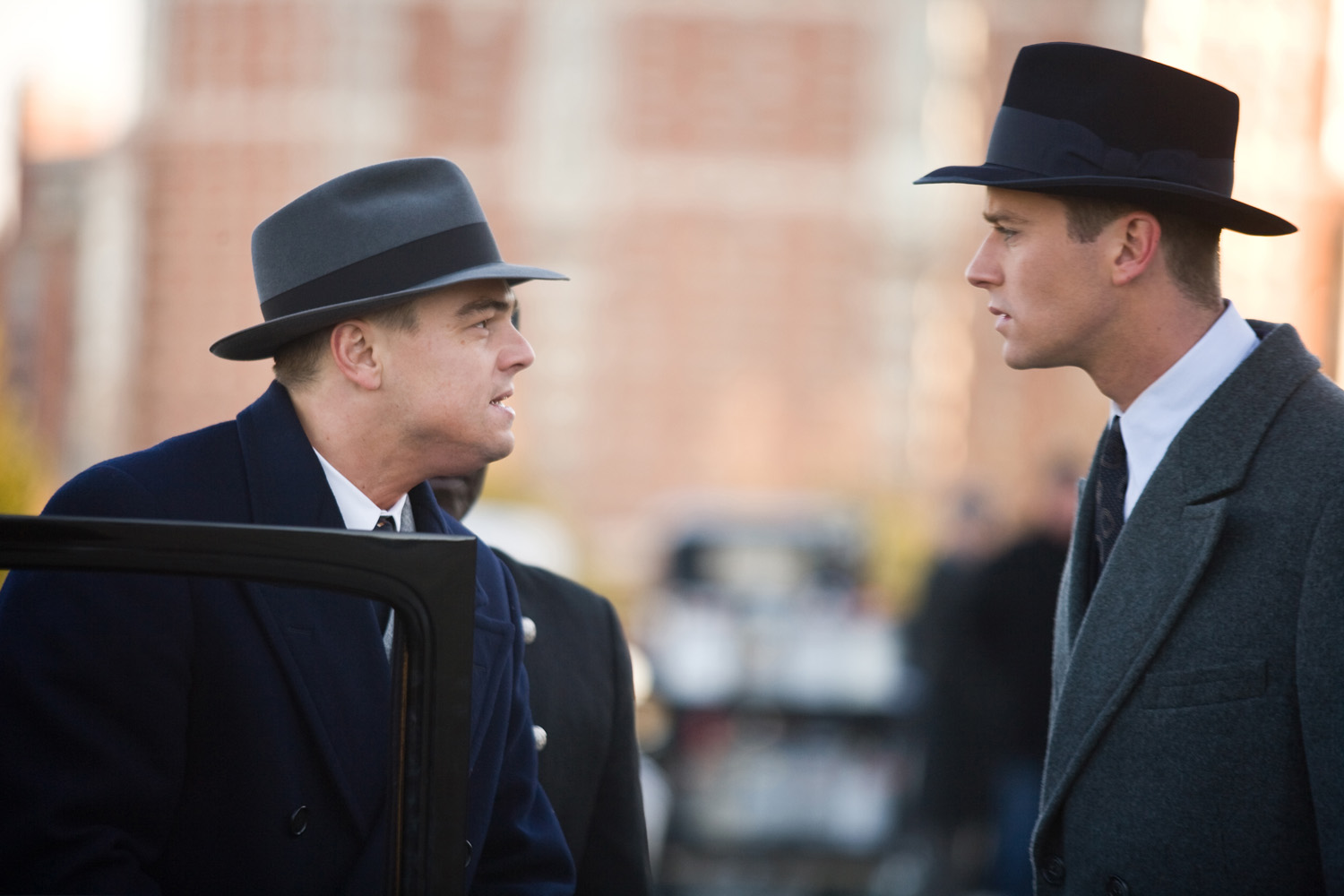
He received universal acclaim for portraying the Winklevoss twins in 2010's “The Social Network.” Now, Armie Hammer follows-up that success with a dramatic turn in Warner Bros.' new, controversial biopic, “J. Edgar” starring Leonardo DiCaprio and directed by Clint Eastwood. Hammer plays Clyde Tolson, J. Edgar Hoover's closest colleague and constant companion – a performance for which he recently got nominated for Best Supporting Actor at the Screen Actors Guild.

Trust was vital to the legendary Hoover – director of the Federal Bureau of Investigation for nearly 50 years -- though he bestowed his trust on only a few individuals over the course of his lifetime, those few he felt were truly loyal to him. In order to paint a complete portrait of the man, it was critical to the filmmakers to capture those key relationships that helped reflect and reveal who he was, beginning with his friend, Clyde Tolson.


From producer Brian Grazer’s perspective, “The relationship these two men had was one of companionship and joy, but also loneliness and isolation. They were both a product of their time.”

DiCaprio says, “They ate lunch and dinner together every day, went on vacations together. Whether they were together in any other respect…well, no one living knows the truth. In the film, it’s seen as almost an unrequited love, but a lasting one, nonetheless.”

Hammer says that, whatever their personal relationship, “Clyde was always dutifully by the Director’s side, literally his right-hand man. That was just the way they operated.”

Armie was terrific as Tolson,” Grazer states. “He was so polished in the part and brought a very subtle but tangible energy to the role, and he had a very natural rapport with Leo.”

Though there was not nearly as much information to be found about Tolson as there was Hoover, Hammer dug deep to learn about his character. “I hired a professional researcher, and she helped me find everything that’s out there on Tolson, even his junior high school year book,” he says. “According to some of the old FBI guys he was very observant, often the smartest man in the room. He was nicknamed ‘the human computer’ because he had a photographic memory. So even apart from any attraction there might have been, it’s easy to see why Hoover would rely on him so heavily.”

Hammer is emerging as one of Hollywood’s most promising young actors. His performance as the Winklevoss twins in the award-winning film “The Social Network” garnered him critical praise and positioned him as one of Hollywood’s breakouts of the year. Hammer was nominated Most Promising Performer by the Chicago Film Critics Association, and awarded Best Supporting Actor by the Toronto Film Critics Association. The film received a Screen Actors Guild Award® nomination for Best Ensemble as well as Best Picture at the Golden Globes, and eight Academy Award® nominations, of which it won three.

In 2012, Hammer will begin production on “The Lone Ranger,” in the title role, alongside Johnny Depp and under the direction of Gore Verbinski.

Opening soon across the Philippines, “J. Edgar” was produced under the banners of Imagine Entertainment and Malpaso. The film will be distributed worldwide by Warner Bros. Pictures, a Warner Bros. Entertainment Company.

Monday, January 9, 2012

CLINT EASTWOOD UNVEILS LATEST MASTERWORK – “J. EDGAR”

J. Edgar Hoover, the subject of Warner Bros.' new drama “J. Edgar” starring Leonardo DiCaprio, was a complex and compelling figure who captivated America and whose legacy is still felt in the halls of the FBI building named for him. He was the catalyst for modern forensics and created a system of federal laws that transformed the U.S. in a multitude of ways that remain relevant today. Both feared and revered, the man was a dichotomy whose public and private lives would spark rumor and innuendo, but, thanks to his eternal secrecy, the question of who he really was remains largely speculative to this day.

Director Clint Eastwood, who grew up during his reign, was intrigued by the chance to explore Hoover on film. “Hoover was a top cop, or a top ‘G-Man,’ as they called them in those days, but I didn’t really know much about him. He kept a high profile—he was seen with movie actors and famous writers at social gatherings and what have you—but he was an enigma in many ways.”

Therefore, when the screenplay for “J. Edgar” crossed his desk, the filmmaker says, “I was already curious, especially about how the screenwriter, Dustin Lance Black, had approached it. It was really a character study. I liked the story a lot.”

“This is a story about relationships,” Eastwood says, “intimate interactions between Hoover and everyone around him, from those closest to him—Clyde Tolson, Helen Gandy, his mother—all the way to Robert Kennedy and other well known political figures, even presidents. If it had just been a biopic, I don’t think I would have wanted to do it. I like relationship pictures, I like exploring why people do or did certain things in their lives.”

“Coming off of ‘Milk,’ Hoover was someone I really wanted to investigate,” writer Black states. “To me, he seemed the very opposite of Milk: a man with tremendous political power, but intensely closeted when it came to his personal life.”

The project came to Black through veteran producer Brian Grazer, who had worked with Eastwood once before and was eager to do so again. “I wanted to do a movie about J. Edgar Hoover—not a documentary, but an actual feature film,” he relates. “I was interested in the power and corruption that existed in his world, much of it of his own making, in spite of his being such a dedicated patriot.”

Black and Grazer settled on a few key points on which to center the film, including the Lindbergh kidnapping and the formation of the Federal Bureau of Investigation.

“I really wondered how this man, who started out with the best of intentions and went on to create the FBI and bring down some of the country’s most iconic gangsters, became so paranoid and, by some accounts, diabolical,” Grazer says.

Black notes, “My initial research labeled him either a hero to the nation, to whom we owe everything in terms of our protection and safety, or a villain who did things in an underhanded manner and was a terror to the country. It all seemed so extreme; I thought the truth had to lie somewhere in between.”

Grazer agreed with that conclusion, and with the writer’s idea to “present it from an internal point of view, from Hoover’s own psyche, letting him tell the story as he remembers it,” the producer says.

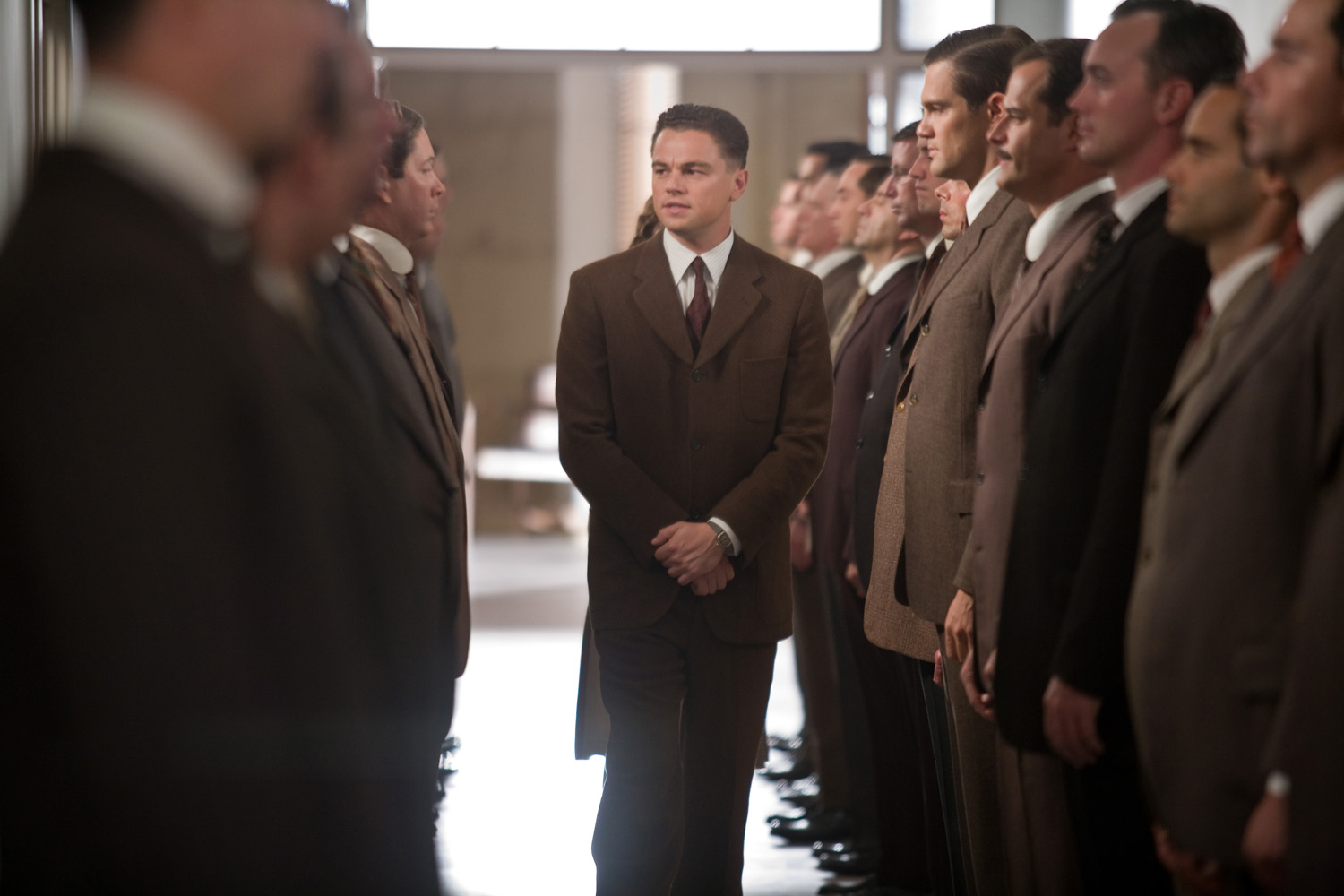
“J. Edgar” begins in the mid-1970s, when Hoover is nearing the end of his life and his time as Director of the FBI. Wanting to preserve everything he’s built, he begins dictating his memoirs, reflecting back on his early days as a man in his early twenties, when he first began working with what was then simply the Bureau of Investigation.

“I think he was interested in his place in history,” Eastwood surmises, “but probably prone to some exaggeration. There are proven moments where he fudged his stories a bit to make himself look a little better.”

“Early on in his career, solving the Lindbergh case and capturing outlaws like John Dillinger helped Hoover to fashion the G-Man image in the eyes of the general public,” Leonardo DiCaprio adds. “There were comic books about them, they were on cereal boxes, engaging America’s youth. It was all part of his publicity campaign to turn government into a force that was helping your family and keeping your children safe.”

Whether or not Hoover was ever able to feel the country was safe or that positive changes were on the horizon, is still a question.

“I think even as an old man, J. Edgar Hoover was still so obsessed with communism that he didn’t recognize things were changing for the better during the Civil Rights Movement,” the actor goes on. “He saw it as an uprising that had the potential to become something more destructive. That’s when he lost his footing. That’s when he failed to see the real future of our country.”

Opening soon across the Philippines, “J. Edgar” was produced under the banners of Imagine Entertainment and Malpaso. The film will be distributed worldwide by Warner Bros. Pictures, a Warner Bros. Entertainment Company.

Monday, December 26, 2011

Sneak Peek: Leonardo di Caprio's J. EDGAR

Oscar® winner Clint Eastwood directs Academy Award® nominee Leonardo DiCaprio in Warner Bros.' critically acclaimed drama “J. Edgar” from a screenplay by Oscar® winner Dustin Lance Black (“Milk”).

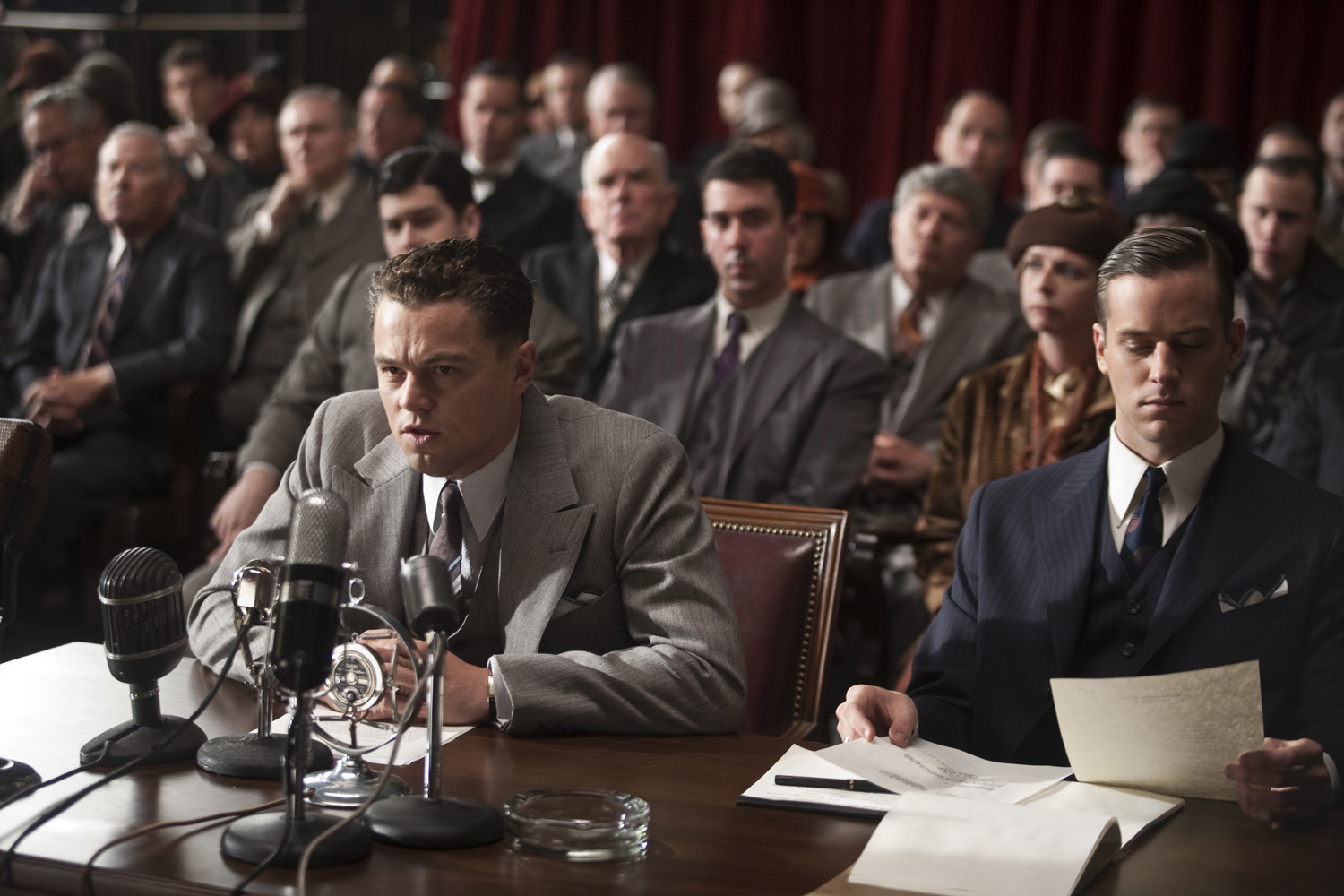
During his lifetime, J. Edgar Hoover would rise to be the most powerful man in America. As head of the Federal Bureau of Investigation for nearly 50 years, he would stop at nothing to protect his country. Through eight presidents and three wars, Hoover waged battle against threats both real and perceived, often bending the rules to keep his countrymen safe. His methods were at once ruthless and heroic, with the admiration of the world his most coveted, if ever elusive, prize.

Hoover was a man who placed great value on secrets—particularly those of others—and was not afraid to use that information to exert authority over the leading figures in the nation. Understanding that knowledge is power and fear poses opportunity, he used both to gain unprecedented influence and to build a reputation that was both formidable and untouchable.


He was as guarded in his private life as he was in his public one, allowing only a small and protective inner circle into his confidence. His closest colleague, Clyde Tolson, was also his constant companion. His secretary, Helen Gandy, who was perhaps most privy to Hoover’s designs, remained loyal to the end…and beyond. Only Hoover’s mother, who served as his inspiration and his conscience, would leave him, her passing truly crushing to the son who forever sought her love and approval.

As seen through the eyes of Hoover himself, “J. Edgar” explores the personal and public life and relationships of a man who could distort the truth as easily as he upheld it during a life devoted to his own idea of justice, often swayed by the darker side of power.

“J. Edgar” also stars Academy Award® nominee Naomi Watts (“21 Grams”) as Helen Gandy, Hoover’s longtime secretary; Armie Hammer (“The Social Network”) as Hoover’s protégé Clyde Tolson; Josh Lucas (“The Lincoln Lawyer”) as the legendary aviator Charles Lindbergh, whose son’s kidnapping changes the public profile of the F.B.I.; and Oscar® winner Judi Dench (“Shakespeare in Love”) as Hoover’s over-protective mother, Annie Hoover.


“J. Edgar” was produced by Eastwood, Oscar® winner Brian Grazer (“A Beautiful Mind,” “Frost/Nixon”) and Oscar® nominee Robert Lorenz (“Letters from Iwo Jima,” “Mystic River”), with Tim Moore and Erica Huggins serving as executive producers.

Behind the scenes, Eastwood reunited with his longtime collaborators, including director of photography Tom Stern, production designer James J. Murakami, editors Joel Cox and Gary D. Roach, and costume designer Deborah Hopper. Eastwood composed the score for the film.

Opening soon across the Philippines, “J. Edgar” was produced under the banners of Imagine Entertainment and Malpaso. The film will be distributed worldwide by Warner Bros. Pictures, a Warner Bros. Entertainment Company.

Saturday, November 19, 2011

J. Edgar (Clint Eastwood, 2011)

J. Edgar is a film about a legend who cared only for respect, made by a man who seems to care only for awards. Clint Eastwood, the most shameless Oscar-baiter currently working, has nothing to say about J. Edgar Hoover, infamous founder of the Federal Bureau of Investigation, nor does he even try to tell his deflated narrative well. This is painting-by-numbers biopic, not even its limp "twist" subverting its schematic use of flashbacks and theme-articulating moments in twilight years. Judging from the mixed reception J. Edgar received, however, Eastwood's increasingly stale approach might finally be rubbing critics the wrong way.

Written by Dustin Lance Black, J. Edgar lacks the passion the writer brought to his script for Milk. One can understand his more ambiguous feelings toward Hoover, but Black finds himself caught between sympathy for the man and clearly critical thoughts on his seedier tactics, and his own mixed thoughts inform the film's presentation of its protagonist. If you think Hoover's brand of "keeping us safe" justice is something this country could use again, you'll be disappointed by its depictions of Hoover's egomaniacal shadow takeover of government. If you see Hoover as the precursor to Patriot Act politics of paranoia and fear, you'll hate its attempts to make an unpleasant man sympathetic. But don't make the mistake of thinking this lack of extremes means that Hoover emerges a rounded, complex human being. Instead, he serves as a repository for lazy screenwriting summaries of character, and Eastwood, famously lazy when it comes to fixing the drafts he's given, does nothing to alleviate the hollow revelations of J. Edgar's character.

One could argue that, given this is a film about Hoover trying to erect his own deluded self-image as legion, the fact that no one in this film never looks his or her intended age is a wry visual commentary. But that ignores Eastwood's status as a no-nonsense workman, and one glimpse at Leonardo DiCaprio earnestly trying to look 24 dispels any notion of play. To fit DiCaprio's middle age, Eastwood has to overemphasize his grim, joyless color palette even during Hoover's ascendancy. The director's modern output has generally been sapped of its pigment, but J. Edgar takes the desaturation to absurd new lows. Everything here looks rubbed down with ash, with such errant use of shadow that evocative use of shadow takes a back seat to mere incoherence.

Nevertheless, DiCaprio gives it his all as Hoover, valiantly working against a leaden script and (in Hoover's old age) cocooning latex makeup in a futile search for complexity. Two things set Hoover's tongue uncontrollably wagging: sex and justice. The former makes him stammer with nervosa (even revulsion), the latter with unchecked excitement at the prospect of fighting enemies. When the lad rushes to the scene of an anarchist bombing on the attorney general in 1919, his determination masks a sense of relieved satisfaction, his paranoid fears of radicals finally confirmed. DiCaprio never delves into the depths of Hoover's fears and vendettas, but he nearly captures the contradictions of the G-man, finding the personality link between the fearlessness of walking into the Oval Office every few years to blackmail a new president and the quivering shyness that comes with being asked for an innocent dance.

DiCaprio certainly escapes the tedium of Black's script with more aplomb than any of the other principal cast. Naomi Watts arrives early as Helen Gantry, the secretary who served under Hoover nearly all of his professional life, but she has nothing to do except follow orders with only the rarest suggestion of unease, which barely registers at the level of seeing someone put a drink on a table without a coaster. Poor Armie Hammer has it worst of all. Playing Hoover's second-in-command (and rumored lover) Clyde Tolson, Hammer does not have the luxury of portraying a human being. As a strapping young lad, he is the projection of Hoover's clear homosexual fantasies: a clean-cut, well-tailored man who makes catty comments about fashion and will also make the first move Edgar is too terrified to pull. As an aged, disillusioned agent, Hammer sports some of the most hysterically bad makeup it's impossible not to feel sorry for him. He looks as if someone used his face to scrape the spackle off a putty knife, latex flesh hanging off him in tumorous clumps.

But damn it, Edgar still loves him, and anyone who takes this film as remotely true to Hoover's life will be flummoxed as to how the man could intimidate anyone with his career-killing secret so plainly visible. The relationship of the two men is chaste, but Black still devotes huge portions of the film to the sexual tension between the two men, even as he isolates it from relevance to the rest of the story. He does not, for example, even float the idea that Hoover's latent homosexuality might have been a motivating force in his obsessive quest for shameful dirt on others. And this is from Black, who had no trouble whatsoever suggesting that such self-loathing was not merely a factor but the factor in Dan White's assassination of Harvey Milk. Instead, we are treated to the almost comical sight of Hoover's mother (Judi Dench), a domineering wench who speaks solely in dolorous thuds of guilt inducement. She even addresses her son's all-but-open sexuality by darkly reminding him of a cross-dresser in their town they called a "daffodil," a word said with hilariously misplaced gravity.

The mother becomes just one more haphazardly inserted element in the film's incessant leaps between desperate grabs for thematic purpose. An amusing split between the director's and writer's age sensibilities come into play here highlights the problem: Eastwood thinks he's making Citizen Kane, the story of how a man's grasp on the American Dream later becomes a chokehold that forces out the grotesquerie of what he loves. Black, on the other hand, is looking to one of that film's clearest progeny, The Social Network, which works on a smaller scale yet aims even higher, seeking to precede Kane by showing how such creation myths as the American Dream begin. J. Edgar thus tries to be both, but in treating Hoover as the product of his own creation myth, the film betrays an unwillingness to either straighten out the inconsistencies in vision or to pursue this ouroboric theme to its ambitious conclusion.

As such, J. Edgar is but the latest film to embody the detached laconicism of Eastwood's actor persona. For all his formal chops, Eastwood seems increasingly indifferent to the quality of his own work even as almost everything he does feels cynically calculated to get some tacky statue. His last film, the even more dismal Hereafter, boasted some truly awful moments of crystallized directorial laziness, embarrassingly simple mistakes a man of Eastwood's stature and age should not have made. J. Edgar has one such moment in a flashback to a horse race where Edgar and Clyde bonded, or at least, that's intended to be the focus of the shot. My attention was directed to what the camera itself was focused on, which is to say, the railing in front of every human being in the shot. This is a blunder I expect a sandals-and-black-socks-wearing father with a Flip cam shooting the family vacation to make, not Eastwood and his cinematographer Tom Stern. And for the love of God, will someone stop letting him make his own scores? His wretchedly plodding piano notes sound less like an evocation of Hoover's inner pain than a drunk slowly pounding the same four keys in a stupor.

Hereafter was spectacularly bad, but J. Edgar feels like every issue I've had with late-career Eastwood—weak script, formalism so stiff it's banal, an overinflated sense of importance—put into one film. The best I can say for it is that, while taking everything else from Changeling, at least the movie didn't port over that film's overwrought melodrama. But I might have actually liked some more weeping and shrieking, if only to wake up the audience. As the story of a man's life, J. Edgar fails miserably. As a thematic statement on how a man chased the idea of America with such force that he actually corrupted the very ideal he wished to embody, it fares even worse. Sporting the worst framing device since Saving Private Ryan, turgid cinematography, and actors left without a clue how to progress, J. Edgar proves so dull one cannot even say it spins its wheels. Hell, it doesn't even shift out of park.

Friday, November 4, 2011

Leonardo DiCaprio and Clint Eastwood discuss cross-dressing, aggressive gay kisses in 'J EDGAR'

The Hollywood Reporter talks to Leonardo DiCaprio and Clint Eastwood about the upcoming biopic J Edgar. Sounds as though they play the gay element right on the edge.

On the gay kiss:

Neither Eastwood nor DiCaprio has drawn any conclusions about Hoover sexuality.

"Whether he was gay remains to be seen," Eastwood says. "But [he and Clyde Tolson] were inseperable (sic) buddies. Was that becase he didn't trust anybody else or was it a love story? I think they had a great affection; whether it was gay or not, I don't know."

DiCaprio elaborates, "What you cannot doubt is that Clyde Tolson and he had a relationship that spanned most of their life; they lived with each other, had lunch and dinner, and [Hoover] left everything to Clyde. Unarguably, they were partners in some sense."

The film depicts Tolson aggressively kissing Hoover on the mouth at the end of their fistfight.

And the rumored cross-dressing:

"Along the way, people accused him of [that]," Eastwood notes. "But nobody knows how accurate it was. Evidently the woman who accused him of that, her husband had been sent to the slammer by Hoover. So you don't know how much was vengeance."

Eastwood himself believes "there is a certain amount of truth" to all the allegations, but wanted to retain some ambiguity. One scene in the film shows Hoover wearing his mother's dress.

Source: Towleroad

Sunday, October 9, 2011

LEONARDO DICAPRIO is 'The Most Powerful Man in the World' in posters for 'J EDGAR'

Two new one-sheets have been released for J Edgar, featuring the barking visage of Leonardo DiCaprio as the former FBI head.

FBI Officials, Former Aide Tell Clint Eastwood They Didn't See Anything Gay About J. Edgar Hoover

Some insights into the upcoming Clint Eastwood biopic of J Edgar Hoover and the research Eastwood and the cast did on Hoover's rumored homosexuality from USA Today.

The folks at the Hoover Foundation don't seem too pleased that this angle was being researched or may be explored in the film, and deny that Hoover was gay, but don't want anyone to think it's because they're anti-gay:

William Baker, a former agent and Hoover foundation vice president, characterized Eastwood's letter as "polite, but non-committal."


"Concern still persists (that the angle is being explored)," Baker said. None of the agents interviewed has seen the film. What alarms them is what Baker has heard from people familiar with the movie and a suggestive image in the movie's trailer Hoover's character clutching the hand of Tolson, played by Armie Hammer.

"We're caught in a dilemma here," Baker said. "We don't want to support something not based in fact, but we're not against the new FBI and diverse workplace."

Meanwhile, the Hoover Foundation chair had a bit of a stronger reaction:

"There is no basis in fact for such a portrayal of Mr. Hoover," William Branon, chairman of The J. Edgar Hoover Foundation, wrote to Eastwood this year. "It would be a grave injustice and monumental distortion to proceed with such a depiction based on a completely unfounded and spurious assertion."

Eastwood and DiCaprio met with the FBI earlier this year. Assistant FBI Director Mike Kortan told them the trail is cold on Hoover's homosexuality:

"Vague rumors and fabrications have cropped up from time to time, but there is no evidence in the historical record on this issue."


And a former aide to Hoover told DiCaprio the same thing:

"When the subject of homosexuality came up, I made it very clear that I never saw any evidence of it whatsoever," said DeLoach, 91, who served as Hoover's deputy director for more than five years. "I traveled with him, I ate in his home and he in mine. I knew Clyde Tolson to be Mr. Hoover's companion and best friend. When you are somebody like Mr. Hoover, I guess you need somebody to talk to."

Source: Towleroad


Wednesday, July 13, 2011

A Perfect World (Clint Eastwood, 1993)

A Perfect World takes plays in the days before John F. Kennedy's assassination in Dallas as a prison breakout in Huntsville leads to the taking of a hostage and a manhunt across Texas to bring the escaped to justice. This setting is no accident: with the shadow of Kennedy's literal and symbolic demise hanging over the film, Clint Eastwood's portrait of stunted, doomed innocence is all the more poignant, and it's no wonder this simple but powerful psychological study emerges as one of the director's finest works.

After a tranquil but confusing shot of a man lying in a field next to a Casper mask and some fluttering cash in the wind, Eastwood moves back in time to show a strict Jehovah's Witness keeping her children inside on Halloween and refusing candy to any kids who wander onto her doorstep. Eastwood breaks up these scenes with shots of the prison breakout, as Robert "Butch" Haynes (Kevin Costner) and Terry Pugh (Keith Szarabajka) crawl out through the ventilation system and hold up a prison official to make him drive them off the grounds. The connection is clear: for the young, repressed son, Phillip (T.J. Lowther), his home is as much a prison as the literal institution, though he's done nothing to deserve his incarceration. When the two cons break into the house and take him hostage, they ironically facilitate his own freedom despite using him as leverage. Along the way, he and Butch affect each other in profound ways, mainly because Eastwood, a director I've often found overly insistent, never forces the point.

Being on the road unleashes the ids of not only the pent-up convicts but Phillip. Pugh, an uncontrollable fiend, is only made more wild: he fires a pistol at water towers, even into the roof of the getaway car. One suspects that Butch takes the boy hostage instead of the mother or the daughters as much to ward off any sexual shenanigans on Terry's part. When that proves to be insufficient, the trio is quickly reduced to two, and the protective bond between Butch and Phillip is sealed. Phillip's freedom is far more joyous: Lowther's look of longing and sadness as he watched neighborhood kids vindictively egg his house for receiving no candy laid the groundwork for his desire for rebellion, and he experiences the first real happiness of his life riding with Butch. Junk food, riding on top of a car, going on trick-or-treating (amusingly facilitated by Butch threatening confused adults), Phillip finally gets to experience a bit of life.

On paper, this film sounds like the worst kind of pop psychology, the notion of a criminal becoming the father he never had for a boy who also lacks a true father figure opening up the possibility for sub-Spielbergian schmaltz. But Eastwood's workmanlike elegance has rarely, if ever, served him better. The scenes between Costner and Lowther are natural and in the moment. Costner's own limited range actually serves the film well in this respect; a more confident and versatile actor might have tried to show off, to make sure we saw the symbolic importance of the warming relationship between criminal and hostage, boy and man. Instead, he simply reacts off Lowther, bringing out Butch's own hangups in natural, contextual ways instead of telegraphing them at every step. His parental issues manifest in the form of sharp but brief glances at yelling mothers or abusive fathers, while Lowther also proves to be an understated performer. The boy actually progresses in his affection for the man who holds him hostage rather than resist until some vague shift that turns him into a devoted companion.
 
I've never been the biggest booster of Eastwood, but even in his weakest moments, he has a command of the camera that finds an unlikely balance of simple construction and grace. In the film's early moments, he connects the prison, Phillip's home and, shortly thereafter, the Texas Rangers who take on the case to track the escapees; disparate locations all, but the director always finds some way of smoothly linking them. The aforementioned metaphorical significance links the prison with the house, and Eastwood transitions between wholly non-matching shots of the suburbs to the office in Dallas by maintaining the same elegant track-forward, cutting from the camera moving toward the devastated mother to moving with a Ranger walking toward the office of Red Garnett (Eastwood), the Ranger in charge of the case. This steady progression makes sense of the spatial leaps, and this almost unnoticeable display of professionalism sets the bedrock for the film's human complexity.

He also knows how to set up a layered joke, and A Perfect World does much of its character building through moments of human comedy. Butch flashing his gun to get a housewife to play along with Phillip's belated trick-or-treating, or his subsequent stick-up of a family riding in their brand-new car, are funny, but these moments deepen the characters. In the case of the latter, Phillip himself cannot help but laugh at the sight of the family gaping dumbly after the stolen car, but Butch admonishes him, nothing that the father did the right thing by surrendering a material good rather than starting an altercation that might have led to Butch shooting the man or even the whole family. The scene where Butch has to explain sex to the boy after the kid witnesses him making out with a waitress is predictable, but Eastwood trusts the actors to make something amusing and fresh out of the situation, and to see the escaped convict suddenly blanch is indeed funny.

Likewise, Eastwood builds the relationship between Red and Sally (Laura Dern), a criminologist assigned to his search party to his annoyance, through comic tension. Eastwood has never had that strong a grasp on progressive women, and Sally could have been an absolutely horrid stereotype of a career-driven woman trying to prove herself. Instead, Dern plays her as someone so confident in her abilities that she does not remotely care what Red or the other men think. Her indifference only makes them look more foolish, such as the scene where Red has the driver of their mobile command center keep inching forward as she tries to get in. And because she simply does her job, Red comes to respect her much faster and to see her as more than just a bureaucrat weighing down the investigation*.

At his best, Eastwood's camera not only pulls back to let the actors do their thing but actually works in harmony with the performances. While riding in the trailer with the other lawmen, Sally abruptly starts playacting as Butch, relating facts from the man's past. The cuts in this scene only move away to catch the reactions of the confused men, who start to address her as Butch the way baffled audience members will often speak to a puppet rather than the puppeteer. Dern never oversteps her boundaries, never goes for OTT histrionics or analysis of Butch's life. She just relates the facts to gently guide the men to interpretative conclusions, and without Eastwood's simple but effecting cutting scheme, it would have been too suggestive and obvious. Elsewhere, Eastwood places a lot of faith in Costner to sell the suspenseful scenes, the judicious editing working with Costner's small but unmistakble gestures of worry and menace rather than around them. His camera subtly positions itself as a series of shifting perspective shots of nervous bystanders catching sight of his gun or a threatening gesture and Costner keying in on a radio newscast that will alert someone to their real identity or of a hand reaching for a telephone.

The film's climax is perhaps the most bravura moment in Eastwood's filmography, an extended hideaway at a farmhand's home that begins innocently and escalates so smoothly that the sudden snap somehow seems inevitable in retrospect. Costner has never been finer, the slow burning of long-repressed feelings finally exploding on this poor family as Phillip suddenly has to come to terms with the sort of man Butch can really be. The wife pleads with the criminal, saying she knows he's a good man, and the matter-of-fact coolness with which Costner replies "No, I ain't a good man.  I ain't the worst neither.  Just a breed apart" is horrifically troubling. The sequence appears to end several times before it does, finally culminating in a payoff that is both dynamic yet oddly anticlimactic.

As much as I've criticized Eastwood's works, that sensitivity to his weaknesses is offset by my total inability to pin down just how he pulls off his best stuff, which is typically better than anything any other director, at least in this country, can do. Eastwood essentially devotes the last half hour to the extended climax, which moves through multiple moods and payoffs between Butch/Phillip and the poor black family whose own behavior is not so clear-cut as we are first led to believe by the patriarch's kindness to strangers. And then Eastwood can maintain that climax into the confrontation with the law, which itself subverts expectations despite the expected outcome, and outcome that also contextualized the bizarre opening shot and replacing the strange beauty with intense tragedy. When at last we learn of the true reason for Butch's intended destination, this haunting frame recalls another great auteurist statement from 1993, Brian De Palma's Carlito's Way. Both films depict men chasing impossible dreams, perfect worlds away from their constricting, fatal lifestyles. But like Sally earlier told a condescending lawman, "In a perfect world this wouldn't have happened in the first place." Just as Carlito Brigante's fantasy of the perfect, tranquil retirement is borne of the imperfection of his occupation, so too is Butch's dream the result of unhealed psychological wounds, wounds that only began to be treated by the boy who ultimately symbolizes a dream no less intangible for him.


*Eastwood's disregard for bureaucratic justice might seem like a conservative hatred of desk jockeys: when the team discovers the prison official forced to help the men escape murdered in his trunk, Red casually says, "Well, there's our bureaucrat." But it is worth noting that his depiction of a flawed system does not stem from a belief that paper-pushers and regulations hold back the sweet revenge of rough justice but that broadly applied laws allow for no leeway in extenuating circumstances and emotionally and psychologically varied scenarios. Ergo, the problem is not, unlike in Michael Bay films, that ball-busting bureaucrats take all the fun out of executing someone, it's that they expedite disproportionate responses and then bury the outrage in paperwork.

Tuesday, October 26, 2010

Hereafter

If the word "ponderous" did not exist, one would invent it to describe Hereafter. "Ponderous" is such a great word: one cannot say it would communicating its meaning merely through diction. It forces one's register lower, forcing the short "o" sound out in booming baritone like the blast of a great war horn echoing around a mountain. It's such a noble word, in fact, that while anyone should be able to write it down, only the most refined and eloquent of British-accented speakers should be allowed to say it aloud.

If it seems I have lost track of the review before it has even started, that is because merely thinking about the word "ponderous" has given me more joy and provoked more thought than anything in the total of Hereafter's two and a half hours. If there is anything positive to be found in the movie's plodding, half-baked, hollow treatises on the possibility of life after death, it is that Clint Eastwood's lifeless direction may finally swing people around to my side. Perhaps America's most coddled filmmaker has at last pushed his luck too far.

It takes balls to open a film that has nothing to do with any real life tragedy with the real life tragedy of the Indian Ocean tsunami, and the shamelessness of the opening segment sets a low bar the film never manages to clear. Focusing on Marie (Cécile de France), a French television journalist on holiday, the sequence plays out in clumsily animated CGI that leads to a choreographed setpiece that appears to want to excite more than terrify. As the water carries Marie and everything else in its unstoppable crush, we get cheap glimpses of cars crashing into people and power lines falling into the water and zapping nearby souls. Worse still, the POV shots of the camera moving through the water feel like a flume ride at Disneyland, and they're about as spiritually rewarding. Worse still, Marie drowns and spends a few moments legally dead, during which time she crosses over to the other side and sees the stereotypical bright light. The digital effects here are distracting, if more cleverly done than the cheap wash of water previously seen, and the tease of the afterlife does nothing to spark curiosity, much less wonder. Eastwood is clearly out of his element here, but no other film has more sorely tested the idea whether he has any directorial element at all.

Jim Emerson recently posted some serious thoughts on Eastwood's supposed legacy as a director that track closely enough to my own that I need not enumerate my issues with him here (or at least, not again). Where I disagree with Emerson is in his claim that, apart from the classicist gloss Eastwood paints over his films, there's nothing in them to make any one seem, on its face, a Clint Eastwood film. That's largely true, but there are a few recurring themes. Chief among them in his modern work is the idea of lost innocence, a realm Steven Spielberg has been plumbing his entire creative life. Eastwood, however, tends to enjoy more critical adulation for his supposed maturity on the subject where Spielberg is too much of a man-child. As it so happens, I recently returned to Sir Steve's Empire of the Sun, a film that depicts the decay of a boy's innocence through separation and atrocity, told almost exclusively though visual means that blur the line between subjective romanticism and objective horror in a way that would not be equaled until Guillermo Del Toro took it to the next step with Pan's Labyrinth. When Eastwood wants to communicate lost innocence, he lets it be known that a child was raped, or killed (or both). I posit the question: which of these approaches sounds less nuanced?

Hereafter, a movie about the possibility of a life after death, must naturally also concern death, and one of the several diverging and converging storylines -- yes, Peter Morgan saw Crash and Babel and apparently thought the network narrative had not sufficiently been snuffed -- involves two adorable, precocious twin brothers. Is one of them abused or killed? Check. Oh, and they also care for a mother who's an alcoholic (and a junkie, because when it rains it destroys beaches in Thailand, killing hundreds of thousands pours). The surviving lad, Marcus, cannot cope with losing his brother, and his numb reaction to being placed in foster care matches up with Marie's distraction back home in Paris.

Then, Eastwood introduces the main arc, that of George Lonegan (Matt Damon), a construction worker who, we learn, has the ability to communicate with the dead. No, really. You'd be forgiven for thinking he was a fraud, for the yes/no questions he asks his clients are of the same sort that charlatans use to lead gullible and vulnerable payers. In fact, when Morgan's script addresses the frauds, it must paint them in the most absurd light possible just to make George's style plausible, calling into question how anyone could be fooled.

George, of course, just wants to leave that side of his life behind him, saying on two occasions that his ability "isn't a gift. It's a curse." He takes night classes on cooking, where he meets nepotism personified, Bryce Dallas Howard, who shows up late to the first lesson because she was playing the Anne Hathaway role in M. Night Shyamalan's remake of The Devil Wears Prada -- the twist is that it's actually the Devil! Howard brings all her halting, overacted anti-charm to the part of Melanie, whose presence is cut mercifully short when she gets close to George and insists he read her when she learns of his powers. I don't want to give away what the reading reveals, but if you've been paying attention so far you can guess when I say "double check."

The problem with network narratives is that it's difficult to transition between storylines without editing arbitrarily, and rarely has this flaw been so evident. Before we spend enough time with anyone to care about their issues and their pain, Eastwood leaps countries and continents to deal with the most tenuously related bullshit. I've often been nonreactive to something meant to be sad in a film, but never have I been so utterly unmoved by the death of a child on-screen. All I could think about was the absurd editing of a van with a large grill braking before striking the poor British lad, who then somehow flipped up and over the grill to smash into the windshield. I couldn't be expected to believe in this film's vision of an afterlife because it doesn't have any care for physics in its life-life.

That laziness is rampant in this picture. Eastwood needs to stop scoring his films. There, the end. John Carpenter has a way with electronic minimalism. Robert Rodriguez has a raucous Latin-rock-jazz flare. Clint Eastwood perennially sounds like he's tuning the instruments for the actual musicians who never arrive. I always hold out hope for the films he scores that the three-note guitar and repeating piano chord will morph into something atmospheric in the vein of Ry Cooder's Paris, Texas score or Neil Young's haunting work on Dead Man, then I remember that those two are accomplished musicians with a deep knowledge of the craft and not some guy on a power trip trying to prove he can do it all. All exposition is handled through dialogue, including a medical diagnosis for George's ability to speak to the dead, and just when you've gotten over the offensiveness of using the tsunami to suck people in, Eastwood chucks in the London Tube bombings for added offensiveness. When Marcus looks for videos on YouTube that talk about death and the afterlife, he first watches a video by a Muslim who speaks of the Qur'an, then Marcus watches another video, this time by an evangelical. If you pay attention to the text of the video description, however, it does not change when Marcus picks another video, so it still talks about the Five Pillars of Islam leading to salvation as a man talks about Jesus. That little moment summed up the entire film for me: no effort whatsoever.

Worst of all is the depiction of the afterlife. It may sound childish and direct to say this, but there is a great charm in the blunt honesty of childish perception. So here it is: I despise this vision of the afterlife. Christopher Hitchens once hilariously described the Judeo-Christian conception of heaven as a "celestial North Korea," in which the supposedly blessed were charged with singing homilies to the "Great Leader" for all eternity. I am reminded of the old stories of Stalinist Russia, in which audiences clapped for hours because the first one who stopped would be sent to the Gulag.

Peter Morgan's vision of a pan-humanist afterlife is even more dull. Voices do not stay with George long because they want to get back to the wonderful existence of the afterlife, yet whenever we catch a glimpse of the world beyond, we see only silhouettes of people standing idly in pure white as if waiting for George to talk to them. They have no real wisdom to impart, because they're trapped in a film that doesn't have anything to say either. They stand in the Elysian Fields waiting for anything interesting to happen. I wonder, then, if they're a reflection of Hereafter's audience.

This is cardboard depth, typified by the emptiness of the character-building traits used to try to make these characters appealing. Marie's experience makes her the one person most worthy of our attention, yet Morgan defines her character in the simplest means, focusing on her reputation as a hard-hitting journalist until suddenly he doesn't, suggesting a breakdown from survivor's guilt until explaining away all the bad things that happened to her as the result of the actions of others. George's quirk is that he loves Charles Dickens, the relevance of which is never shown. I did, however, perk up when Eastwood included a scene of Derek Jacobi, as himself, reading excerpts from Little Dorrit. With Jacobi's classically trained voice and the enduring majesty of Dickens' prose, I had the same look of wonder on my face as Damon and wished I could have listened to that autographed book-on-tape George picked up instead of watching this tired hokum.

And if network narratives diverge on the shakiest of grounds, they fare even worse when everything comes together. A film about death and the afterlife can have no truly explosive dénouement -- I was deeply amused, as ever, by David Edelstein, who wondered aloud if the film might have tried for a big ending by making a metaphysical version of the climax of Close Encounters of the Third Kind, of the characters stepping into a mother ship of death -- but the uneventful finale only underscores the uselessness of what preceded it. Hereafter doesn't have a damn thing to say about death, or life, or life after death, and the maudlin pablum Morgan uses to justify why people might need to believe in an afterlife serves only to throw his fellow atheists under a bus (at which point they would presumably somehow bounce back up into the bus' windshield). Eastwood gets more solid work from Damon, who can make a splash in seemingly anything, and his work with the young, non-professional actors who play the boys stands in sharp contrast to the atrocious job he did with child actors on Gran Torino. But it's all for naught, a decorative flourish on something terrible, like spraying Febreeze on dog shit. Earlier this year, I let Inception off the hook for some of its issues because the ambition and the effervescent cheek of it carried me past the tin-hollow psychology on its questions of reality and surreality.

The problem with Hereafter is that, for its weighty idea, there's no ambition on any level of the project. Not in the tack script, not in Eastwood's workmanlike direction, not even in the performances. It's as if everyone realized halfway through that this picture had no point and went right into CYA mode. The result is a rumination on mortality that makes The Five People You Meet in Heaven look sophisticated and genuine. If nothing else, its lack of narrative cohesion, two-dimensional characters, shameless attempts to elicit an emotional response and clueless depiction of the afterlife proved one thing: Clint Eastwood totally could have directed the finale of LOST.